Wine bottle sizes, from split to Nebuchadnezzar
A standard wine bottle is 750 ml — about five 150 ml glasses. A magnum is 1.5 litres, two standard bottles. The chart below runs from the split to the Nebuchadnezzar.
- 750 ml
- a standard bottle
- ~5
- glasses per bottle (150 ml)
- 1.5 L
- a magnum = 2 bottles
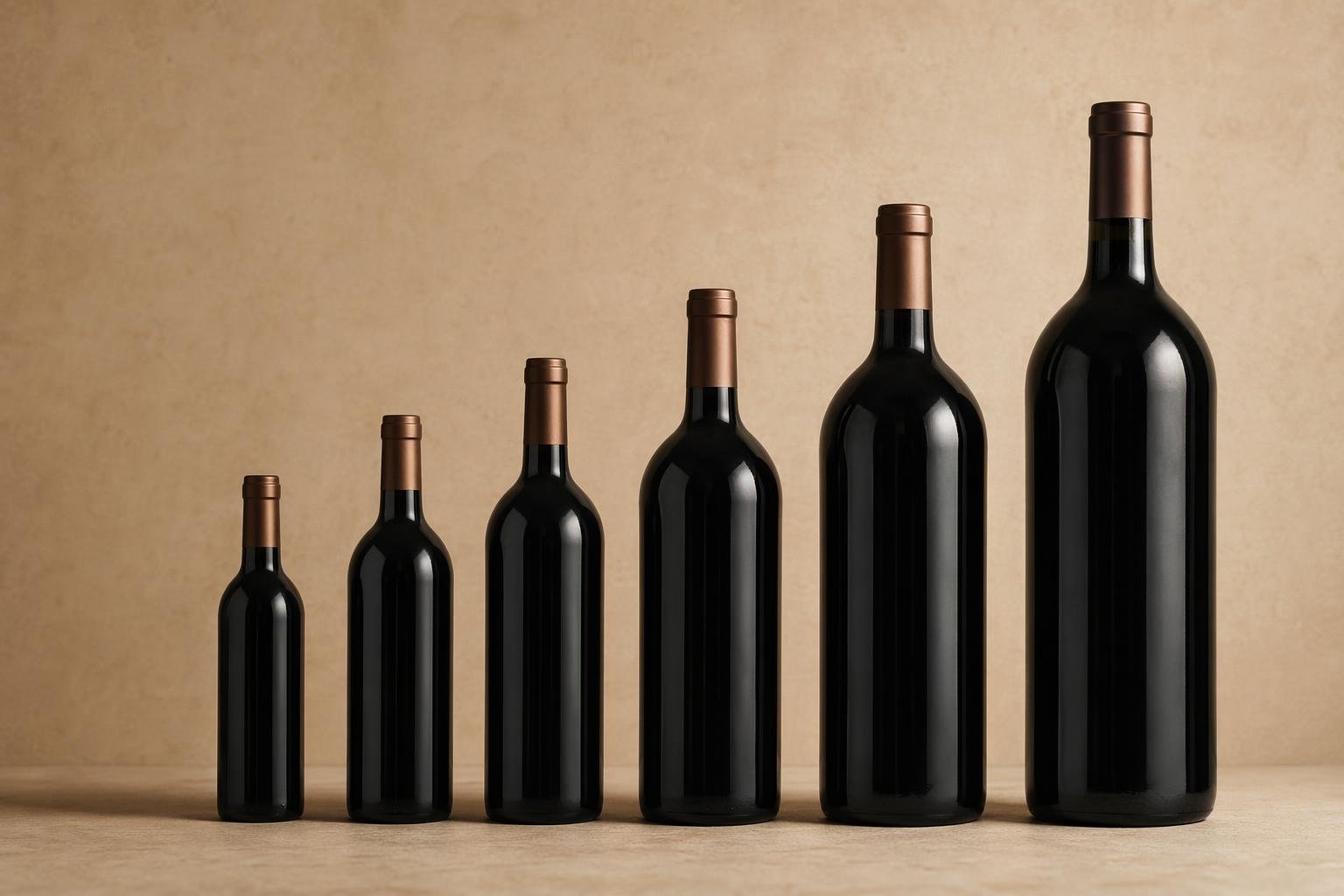
Every wine bottle size
Sizes are named after biblical kings as they get bigger. Volumes follow the common still-wine convention; the bar shows each size to scale.
| Bottle | Volume | Standard bottles | Glasses |
|---|---|---|---|
Split / Piccolo Single serving, common for Champagne and prosecco. | 187.5 ml¼ × Standard bottles | ¼ | ~1.5 |
Half / Demi Half bottle — perfect for two glasses or solo dinners. | 375 ml½ × Standard bottles | ½ | ~2.5 |
Standard The everyday bottle — what you buy by default. | 750 ml1 × Standard bottles | 1 | ~5 |
Magnum A celebration favourite; also ages wine more slowly. | 1.5 L2 × Standard bottles | 2 | ~10 |
Double Magnum | 3 L4 × Standard bottles | 4 | ~20 |
Jeroboam | 4.5 L6 × Standard bottles | 6 | ~30 |
Imperial / Methuselah | 6 L8 × Standard bottles | 8 | ~40 |
Salmanazar | 9 L12 × Standard bottles | 12 | ~60 |
Balthazar | 12 L16 × Standard bottles | 16 | ~80 |
Nebuchadnezzar | 15 L20 × Standard bottles | 20 | ~100 |
Glasses assume a 150 ml pour. Large-format names and volumes vary between Bordeaux, Burgundy and Champagne — the values above follow the most common still-wine convention.
What is a magnum of wine?
A magnum is 1.5 litres — two standard bottles, or about ten 150 ml glasses. It also ages wine more slowly than a standard bottle.
How many glasses are in a bottle of wine?
A standard 750 ml bottle pours about five 150 ml glasses, or six at 125 ml. A magnum (1.5 L) pours about ten.
Pick the wine, then the bottle
A magnum suits a table sharing one dish. These guides say which wine to open for four crowd-pleasing dinners.
- Penne alla vodka: Pinot Noir, Sangiovese or Barbera
- Wine with saltimbocca: Sangiovese or Chianti
- Wine with chicken piccata: Verdicchio or Riesling
- Wine with stuffed bell peppers: Chianti or Tempranillo
- Wine with cheese: soft, hard & blue pairings
- Wine with chocolate: dark, milk & white pairings
- Wine with pizza: margherita to pepperoni
- Wine with steak: cuts and doneness
- Wine with salmon: grilled, smoked, and glazed
- Thanksgiving wine pairing: turkey and sides
Dig deeper into pairing
See the thinking behind the app, meet Sophia, and browse pairing guides on the journal.
Wine bottle size questions
- How many ml is a standard bottle of wine?
- A standard wine bottle is 750 ml (0.75 litres). It pours about five 150 ml glasses.
- What is a magnum of wine?
- A magnum is 1.5 litres — two standard bottles, or about ten 150 ml glasses. It also ages wine more slowly than a standard bottle.
- How many glasses are in a bottle of wine?
- A standard 750 ml bottle pours about five 150 ml glasses, or six at 125 ml. A magnum (1.5 L) pours about ten.
- What is the biggest bottle of wine?
- Among the commonly produced formats, the Nebuchadnezzar holds 15 litres — equal to 20 standard bottles and about 100 glasses. Even larger novelty bottles exist but are rare.
- How big is a half bottle of wine?
- A half bottle (or demi) is 375 ml — half a standard bottle, enough for two to three glasses.
Know the bottle, find the wine
Whatever bottle you open, Gastrona helps you match it to your meal — free wine pairings, recipes and Sophia, your AI sommelier.


Free on iOS and Android.