Wine sweetness, from bone dry to dessert
"Dry" and "sweet" trip up more wine drinkers than anything else. This chart places the wines you actually buy on a single dry-to-sweet scale — red, white and sparkling.
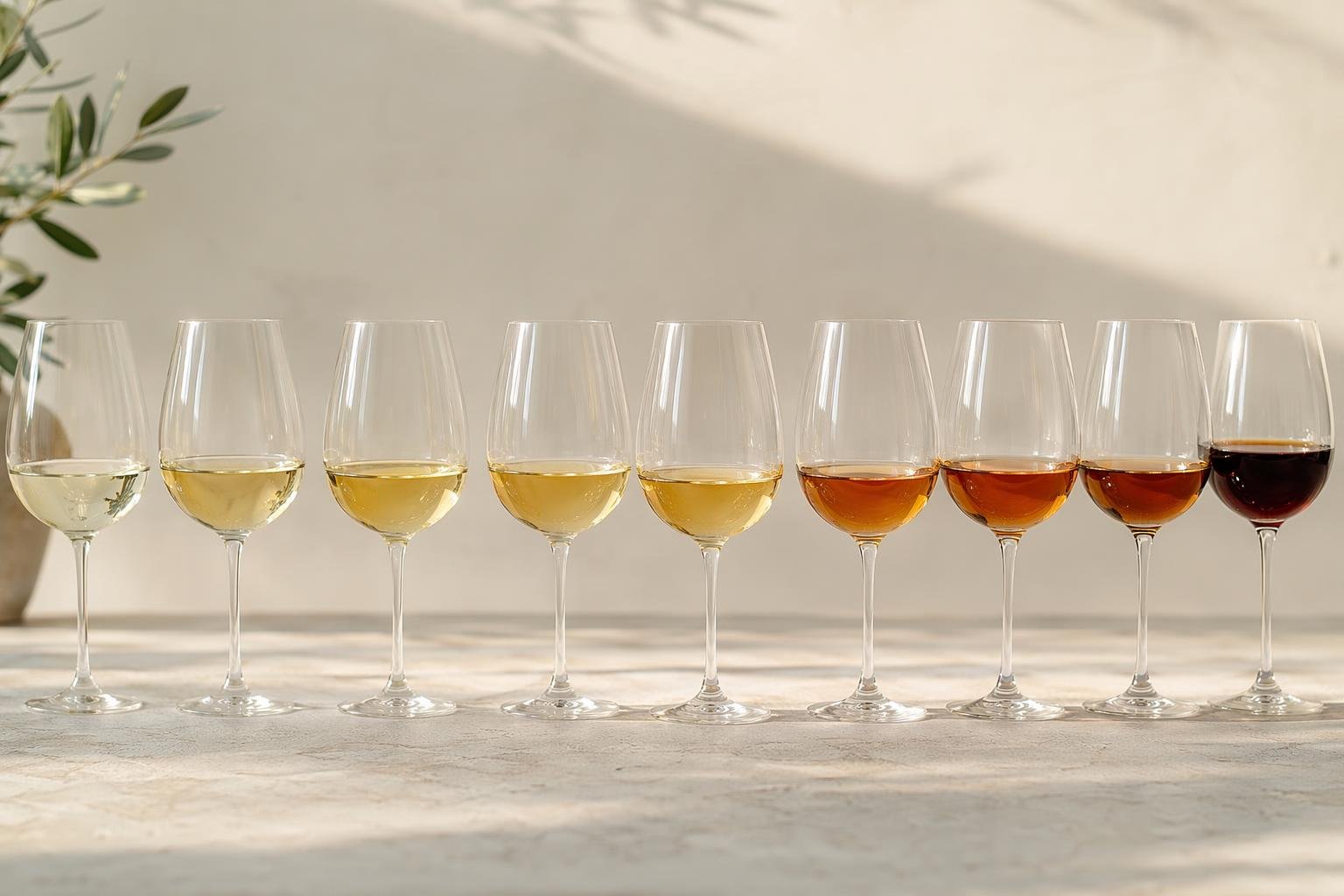
Dry to sweet, by wine type
Each band gets darker as the wine gets sweeter. Within a grape there's always variation — a Riesling can be bone dry or lusciously sweet — so treat this as a map, not a rulebook.
Red wine
Dry → Sweet- Dry
Nebbiolo, Cabernet Sauvignon, Tempranillo, Sangiovese, Merlot, Malbec, Syrah, Pinot Noir
- Off-dry
Zinfandel, Grenache, Lambrusco (amabile)
- Sweet
Brachetto d'Acqui, sweet Lambrusco
- Dessert
Port, Recioto della Valpolicella, Banyuls
White wine
Dry → Sweet- Dry
Muscadet, Albariño, Sauvignon Blanc, Pinot Grigio, Chardonnay, dry Riesling
- Off-dry
Gewürztraminer, Chenin Blanc, Viognier
- Medium-sweet
Riesling Spätlese, Demi-Sec whites
- Sweet
Moscato d'Asti, late-harvest whites
- Dessert
Sauternes, Tokaji, Ice Wine, Riesling TBA
Sparkling wine
Dry → Sweet- Bone dryBrut Nature · 0–3 g/L
Brut Nature, Brut Zéro
- DryExtra Brut / Brut · 0–12 g/L
Extra Brut, Brut Champagne, Cava, Prosecco Brut
- Off-dryExtra Dry · 12–17 g/L
Prosecco Extra Dry
- Medium-sweetDry / Sec · 17–32 g/L
Sec sparkling
- SweetDemi-Sec · 32–50 g/L
Demi-Sec, Asti Spumante
- DessertDoux · 50+ g/L
Doux sparkling
Sweetness depends on the producer and style, not just the grape — Riesling and Chenin Blanc in particular span the whole scale. Rosé runs the same range, from bone-dry Provence to sweet White Zinfandel.
Sweetness is the secret to good pairing
Matching sweetness is one of the most reliable pairing rules: the wine should be at least as sweet as the food, or it tastes thin and sour. It's also why an off-dry Riesling tames chilli heat. Gastrona weighs sweetness — along with weight, acidity and spice — for every match it suggests.
Try the pairing toolDig deeper into pairing
See the thinking behind the app, meet Sophia, and browse pairing guides on the journal.
Wine sweetness questions
- What is the sweetest red wine?
- Among everyday reds, fruit-forward Zinfandel and Lambrusco taste sweetest. For genuinely sweet reds, look to dessert styles like Port, Recioto della Valpolicella and Banyuls.
- What is the driest white wine?
- Muscadet, Albariño, Pinot Grigio and dry Sauvignon Blanc are among the driest whites — crisp, with no perceptible sugar.
- Is Brut sweet or dry?
- Brut is dry — under 12 grams of sugar per litre. Drier still are Extra Brut and Brut Nature; sweeter sparkling runs Extra Dry, Sec, Demi-Sec and Doux.
- What does "dry" mean in wine?
- A dry wine has little or no residual sugar — the yeast fermented nearly all of it into alcohol. "Sweet" means noticeable sugar remains. It's about sugar, not the fruity aromas people often mistake for sweetness.
- Which wines are the sweetest overall?
- Dessert wines top the scale: Sauternes, Tokaji, Ice Wine and late-harvest Riesling can hold several times more sugar than a standard table wine.
From sweetness to the perfect match
Gastrona reads sweetness, body and acidity to pair real wines with your food — free, with a reason for every match.


Free on iOS and Android.