

Introduction
Arctic Char with Rye Bread and Dill is the kind of dish that feels both comforting and refined: delicate fish, earthy rye, and the bright, herbal lift of fresh dill. It has that rare balance of simplicity and sophistication that makes it just as welcome on a weeknight table as it is for a special dinner with friends. The fish itself is naturally rich but clean-tasting, with a gentle sweetness that loves a little acidity and a wine with enough structure to keep every bite lively. That is exactly why this dish is such a rewarding canvas for a thoughtful wine pairing.
If you enjoy discovering the best wine for Arctic Char with Rye Bread and Dill, you are in good company. This recipe invites crisp whites, mineral-driven bottles, and even a light red in the right setting. For readers using Gastrona, this is the kind of meal where a smart wine recommendation can turn a simple dinner into a memorable experience. The result? A perfect match of flavor, texture, and mood.
About This Dish
Arctic char has long been valued for its clean flavor, beautiful color, and versatility in the kitchen. It sits somewhere between salmon and trout in richness, but it is usually a little more delicate than salmon and a touch silkier than trout. That makes it especially appealing in dishes where the accompaniments matter just as much as the fish. In this case, rye bread and dill bring a distinctly Northern European feel, with a nod to Nordic and Scandinavian food traditions that have become increasingly popular in American home cooking.
Rye bread adds depth, chew, and a subtle sourness that grounds the dish. Dill, meanwhile, gives it lift and freshness, sharpening the natural sweetness of the fish. Together, these ingredients create a plate that feels fresh, savory, and lightly briny without becoming heavy. It is a dish built on contrast: soft fish against crisp bread, rich texture against herbal brightness, sweetness against acidity.
That balance is what makes the dish so compelling for wine lovers. A good wine pairing should echo the freshness while respecting the fish’s gentle sweetness. In practice, that means wines with bright acidity, moderate body, and clean fruit. If you are exploring a wine for Arctic Char with Rye Bread and Dill, think of it as a conversation between the plate and the glass, not a competition.
Key Ingredients & Their Role
Arctic Char
Arctic char is the star of the plate, and its flavor is one of the reasons this dish works so well with wine. It has a tender texture and a naturally sweet, clean profile that can handle more than a very delicate white fish, but it still benefits from restraint in the kitchen. Whether roasted, pan-seared, or lightly cured, it rewards simple seasoning and careful cooking. Because it is richer than cod or sole but lighter than salmon, it opens the door to a wide range of wine pairing options.
Rye Bread
Rye bread brings the earthy backbone. Its malty, slightly tangy character adds depth and a rustic note that keeps the dish from feeling too polished or minimal. Depending on the bread, you may get hints of caraway, sourdough tang, or toasted grain. That complexity is important because it gives the wine something savory to meet. Rye also helps shape the mouthfeel of the dish, making every bite more substantial.
Dill
Dill is the bright green thread that ties everything together. Its aroma is fresh, almost grassy, with a subtle anise-like edge that lifts the fish and cuts through richness. Dill is also a classic bridge to wine because it amplifies freshness and makes acidity feel even more refreshing. If you are searching for the best wine for Arctic Char with Rye Bread and Dill, dill is your clue to favor wines with lively acid and clean, aromatic fruit.
Supporting Ingredients
A little lemon, olive oil, butter, salt, and pepper are enough to round things out. Lemon sharpens the fish and highlights the dill, while a touch of fat adds silkiness. The result is a dish that tastes fresh and sweet, yet layered enough to stand up to a thoughtful glass. For a deeper exploration of seafood and wine, you might also enjoy our guide to lobster with lemon, which shares the same elegant balance of brightness and richness.
Recipe
Arctic Char with Rye Bread and Dill
Prep time: 15 minutes Cook time: 15 minutes Total time: 30 minutes Servings: 4 Difficulty: Easy
Ingredients
- 4 Arctic char fillets, about 6 oz each
- 2 tablespoons olive oil
- 1 tablespoon unsalted butter
- 1 teaspoon kosher salt, plus more to taste
- 1/2 teaspoon freshly ground black pepper
- 1 lemon, zested and cut into wedges
- 1/4 cup fresh dill, finely chopped, plus extra sprigs for garnish
- 4 slices rye bread
- 1 tablespoon Dijon mustard, optional
- 1 tablespoon crème fraîche or sour cream, optional
- 1 small shallot, very thinly sliced, optional
Instructions
- Prepare the rye bread. Toast the rye bread until crisp and golden. If desired, spread lightly with Dijon mustard or crème fraîche for extra depth.
- Season the fish. Pat the Arctic char dry with paper towels. Season both sides with salt, pepper, and lemon zest.
- Heat the pan. Warm the olive oil and butter in a large skillet over medium heat until the butter foams.
- Cook the char. Place the fillets skin-side down, if applicable. Cook for 3–4 minutes without moving them, then carefully flip and cook 2–3 minutes more, until just opaque and flaky.
- Finish with dill and lemon. Transfer the fish to plates, squeeze fresh lemon over the top, and scatter with chopped dill.
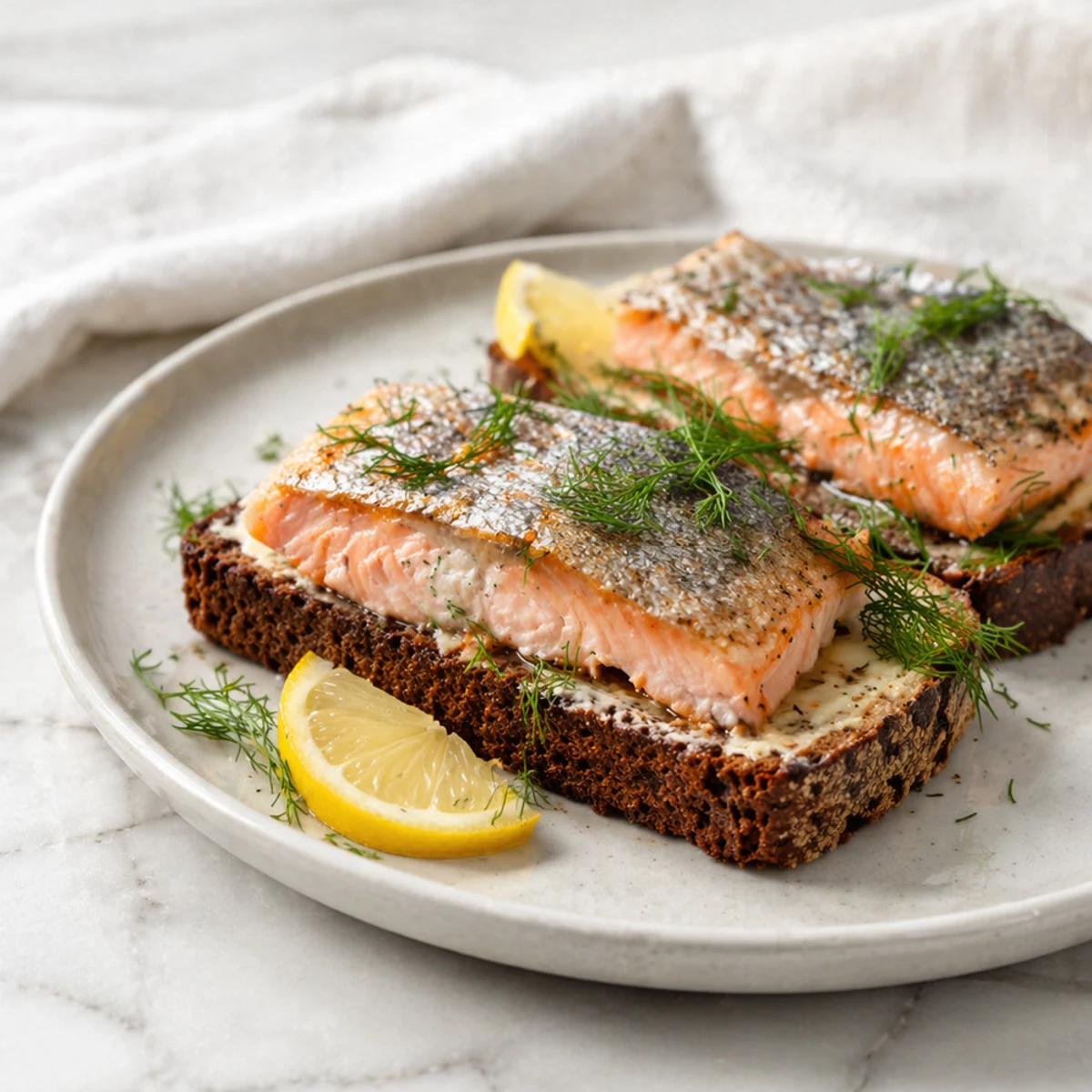
- Assemble and serve. Place each fillet on or alongside toasted rye bread. Add shallot slices if using, garnish with dill sprigs, and serve immediately.
Nutrition Facts
Per serving, approximate:
- Calories: 360
- Protein: 32g
- Fat: 18g
- Saturated fat: 4g
- Carbohydrates: 18g
- Fiber: 3g
- Sugar: 2g
- Sodium: 540mg
Dietary Information
- Contains fish
- Contains gluten
- Can be made dairy-free by omitting butter and crème fraîche
- Can be made gluten-free by serving the fish without rye bread or with gluten-free bread
Perfect Wine Pairings
The best wine pairing for Arctic Char with Rye Bread and Dill should respect three things: the fish’s gentle sweetness, the rye bread’s earthy tang, and dill’s bright herbal character. You want freshness, but not sharpness; flavor, but not oak-heavy sweetness. In other words, look for wines with crisp acidity, moderate body, and a clean finish.
The strongest verified matches lean toward mineral whites and aromatic, food-friendly styles. The top-rated pairing is Telemark Fjord Blend by Arctic Vineyards from Telemark, Norway, a Chardonnay and Pinot Blanc blend with a match score of 89/100. That blend makes sense because Chardonnay brings roundness while Pinot Blanc adds lift, creating a balanced glass for the fish and rye. Another excellent option is Riesling by Königsmosel from Mosel, Germany, also scoring 88/100. Riesling’s acidity and citrus character are ideal when dill and lemon are in play.
If you prefer a more classic seafood wine, Domaine Sainte Claire Chablis by Jean-Marc Brocard from Chablis, France, is another 88/100 match. Chablis is known for its steely minerality and restrained fruit, which pairs beautifully with the clean texture of Arctic char. Folklore Albariño by Pazo Cilleiro from Rías Baixas, Spain, also scores 88/100 and offers saline freshness, stone fruit, and zippy acidity—an especially appealing choice if you like a wine that feels crisp and coastal.
For shoppers in the United States, these styles are often easy to find at Total Wine, Trader Joe’s, BevMo, and local wine shops, usually in the $15–30 range. If you want to explore by style rather than bottle, look for Oregon Pinot Noir in a very light style, Washington State white blends, French Chablis, German Riesling, or Spanish Albariño. A light, bright red can work if you keep it chilled, but white wine is the most reliable wine recommendation here. For a different savory pairing idea, compare this dish with our pork tenderloin with mustard, Belgian-style guide and notice how acidity changes the pairing logic.
Cooking Tips & Techniques
The biggest secret to this recipe is not overcooking the fish. Arctic char is at its best when it stays moist, silky, and just barely opaque in the center. If you are pan-searing, keep the heat at medium rather than high so the exterior does not brown too quickly before the interior is done. If your fillets have skin, start skin-side down and press lightly for the first few seconds so the skin stays flat and crisp.
Rye bread should be toasted well enough to provide contrast, but not so hard that it becomes abrasive. You want crunch, not a jaw workout. If you are using a thick-cut rustic loaf, a quick brush of olive oil before toasting can help it brown evenly and add flavor.
Dill should be added at the end, not cooked aggressively. Heat dulls its freshness, and the dish depends on that green, aromatic lift. A small squeeze of lemon right before serving sharpens everything and makes the wine pairing more vivid in the glass.
Common mistakes to avoid: over-salting the fish, overcrowding the pan, and choosing a wine that is too oaky or too heavy. This is a dish that thrives on clarity. For another seafood technique that rewards precision, see our salt-and-pepper squid post.
Serving Suggestions
Serve Arctic Char with Rye Bread and Dill on warm plates so the fish stays inviting and the bread keeps its texture. A simple garnish of dill sprigs, lemon wedges, and a few paper-thin shallot slices gives the plate a polished look without complicating the flavors. If you want a slightly more composed presentation, place the toasted rye on one side and the fish on the other, letting the juices and garnish bring the plate together.
This dish shines with light sides: a cucumber salad, steamed new potatoes, or tender green beans with butter and herbs. Keep the setting relaxed but thoughtful, especially if you are hosting a dinner where wine is part of the experience. A chilled white poured into proper glassware instantly makes the meal feel more special.
For a refined yet accessible dinner, think of this as a modern American table with Nordic inspiration: simple ingredients, careful preparation, and a perfect match between food and wine.
Frequently Asked Questions
What wine goes with Arctic Char with Rye Bread and Dill?
The best wine pairing is a crisp white with bright acidity and a clean finish. Riesling, Chablis, Albariño, and white blends with Chardonnay or Pinot Blanc work especially well because they match the fish’s sweetness and the dill’s freshness without overpowering the rye.
Is Riesling a good wine for Arctic Char with Rye Bread and Dill?
Yes, Riesling is an excellent wine for Arctic Char with Rye Bread and Dill. Its acidity lifts the fish, while its citrus and mineral notes complement dill and lemon. A dry or off-dry style is usually the most versatile and food-friendly choice.
Can I serve red wine with this dish?
You can, but keep it light. If you prefer red, choose a chilled, low-tannin style such as a light Oregon Pinot Noir. Heavy reds and strong tannins will fight the delicate fish and make the rye bread taste more bitter.
What is the best wine recommendation for this recipe on a budget?
For value, look for German Riesling, Spanish Albariño, or a fresh Washington State white blend in the $15–30 range. These styles are widely available at Total Wine, Trader Joe’s, BevMo, and many grocery stores, making them easy, affordable choices.
Why does dill matter so much in wine pairing?
Dill changes the whole pairing by making freshness the priority. It pushes you toward wines with lively acidity, herbal nuance, and clean fruit. That is why bright whites are such a natural perfect match for this dish.
Conclusion
Arctic Char with Rye Bread and Dill is proof that elegant food does not have to be complicated. With just a few well-chosen ingredients, you get a dish that is fresh, sweet, savory, and deeply satisfying. The right wine pairing brings it all into focus, whether you choose a mineral Chablis, a vibrant Riesling, or a crisp Albariño.
If you are looking for the best wine for Arctic Char with Rye Bread and Dill, Gastrona makes it easy to discover a wine recommendation that fits your taste, budget, and table. Cook the recipe, pour the glass, and enjoy the kind of meal that feels effortless but memorable—the kind of perfect match worth making again.