

Introduction
Few dishes feel as indulgent—and as effortlessly elegant—as entrecôte with Béarnaise sauce. A perfectly seared steak, a glossy, buttery sauce scented with tarragon, and a glass of great wine can turn an ordinary dinner into something memorable. If you’ve been searching for the best entrecote sauce to serve with a special steak night, this classic French pairing delivers all the richness and balance you want.
What makes this dish so appealing is the contrast: the beef is savory and deeply browned, while the sauce is lush, herbaceous, and just sharp enough from vinegar and wine to keep each bite lively. That tension is exactly why entrecote sauce is such a rewarding topic for home cooks and wine lovers alike. The right wine doesn’t just stand beside the dish—it lifts it, softens it, and brings out its best flavors.
Whether you’re planning a date-night dinner, a celebratory meal, or simply want to master a restaurant-style steak at home, this entrecote steak recipe is a beautiful place to start.
About This Dish
Entrecôte is one of those dishes that feels unmistakably French, yet it has become completely at home on American tables. In France, entrecôte refers to a cut from the rib section, prized for its tenderness, marbling, and generous beef flavor. It’s often served simply, because when the meat is this good, it doesn’t need much else. The magic happens in the sauce—and that’s where entrecote sauce takes center stage.
Béarnaise sauce is a classic French sauce built on butter, egg yolks, shallots, vinegar, white wine, and tarragon. It belongs to the family of emulsified sauces, which means it transforms humble ingredients into something silky and luxurious. The flavor is unmistakable: rich but bright, creamy but herbal, decadent but not heavy. That balance is what has made it a favorite with steak for generations.
In American food culture, this dish fits beautifully into the growing appreciation for steakhouse-style cooking at home. It also appeals to diners who love both Old World tradition and approachable luxury. A great entrecote recipe like this one feels special without being fussy. And because the sauce has both butter and acidity, it opens the door to thoughtful wine pairing—especially with wines that offer structure, freshness, and enough fruit to match the steak.
If you enjoy elegant beef dishes, you may also like our prime rib recipe, which shares the same love of deep savory flavor and classic French technique.
Key Ingredients & Their Role
The beauty of this entrecote sauce recipe lies in its short ingredient list. Every component has a clear job, and when they work together, the result is far greater than the sum of its parts.
Entrecôte steaks are the foundation. Their marbling keeps the meat juicy during a hot sear, while the ribeye-style richness gives the dish its satisfying depth. Because the steak is already flavorful, the goal is not to overwhelm it, but to complement it.
Butter is the soul of the sauce. It creates the glossy texture and luxurious mouthfeel that define Béarnaise. In the pan, a small amount also helps baste the steak, adding a subtle nutty richness to the crust.
Tarragon is the signature herb. Its anise-like, slightly peppery aroma gives Béarnaise its unmistakable character. Tarragon is what makes this sauce feel bright and refined rather than merely creamy. It is also the ingredient that most strongly influences wine pairing, because wines with freshness and herbal nuance tend to work especially well.
Shallots, vinegar, and dry white wine provide the necessary lift. They cut through the butter, sharpen the flavor, and keep the sauce from tasting flat. That acidity is important when choosing wine, because the best match for entrecote sauce will have enough structure and freshness to mirror the sauce’s balance.
Finally, egg yolks bind everything together into a silky emulsion. This is where technique matters most in an entrecôte steak recipe: too much heat, and the sauce can break; too little attention, and it won’t thicken properly. The reward is a sauce that clings beautifully to the steak and makes each bite feel complete.
For another comforting, wine-friendly beef dish, see our polenta and braised beef with Merlot.
Recipe
Entrecôte with Béarnaise Sauce
Prep Time: 35 minutes Cook Time: 10 minutes Total Time: 45 minutes Servings: 4 Difficulty: Moderate
Ingredients
- 4 steaks, about 250 g each and 3 cm thick Beef entrecôte steaks
- 250 g Unsalted butter
- 4 Egg yolks
- 3 tbsp, finely chopped Fresh tarragon leaves
- 2, finely minced Shallots
- 75 ml White wine vinegar
- 75 ml Dry white wine
- 1 tsp, plus more to taste Freshly ground black pepper
- 1 tsp, adjust to taste Salt
Instructions
- Take the steaks out of the refrigerator 20 to 30 minutes before cooking. Finely mince the shallots and chop the tarragon leaves. Reserve 1 tbsp tarragon for finishing the sauce.
- Melt the butter gently over low heat. Skim off any foam if you like, then keep the melted butter warm but not hot.
- In a small saucepan, combine the shallots, white wine vinegar, dry white wine, 1/2 tsp black pepper, and 2 tbsp chopped tarragon. Bring to a simmer over medium heat and reduce until about 2 tbsp liquid remains, 5 to 7 minutes. Strain if you want a smoother sauce, or leave the shallots in for a more rustic result.
- Pat the steaks dry and season both sides lightly with salt and black pepper. Heat a heavy frying pan over high heat until very hot.
- Sear the steaks for 2 to 3 minutes per side for medium-rare, depending on thickness. Lower the heat slightly and add 20 g of the butter to the pan. Baste briefly, then cook to your preferred doneness: 52-54°C for rare, 54-57°C for medium-rare, 57-63°C for medium.
- Transfer the steaks to a warm plate and let rest, tented with foil, for 5 to 8 minutes.
- While the steaks rest, set a heatproof bowl over a pan of barely simmering water. Add the egg yolks and the reduced shallot mixture to the bowl. Whisk constantly for 1 to 2 minutes until the yolks thicken and become light and creamy.
- Remove the bowl from the heat and slowly drizzle in the warm melted butter, whisking constantly to emulsify. If the sauce becomes too thick, whisk in 1 tsp warm water. Stir in the remaining 1 tbsp chopped tarragon.
- Taste the Béarnaise sauce and season to taste with salt and pepper. It should be glossy, spoonable, and gently warm, not hot.
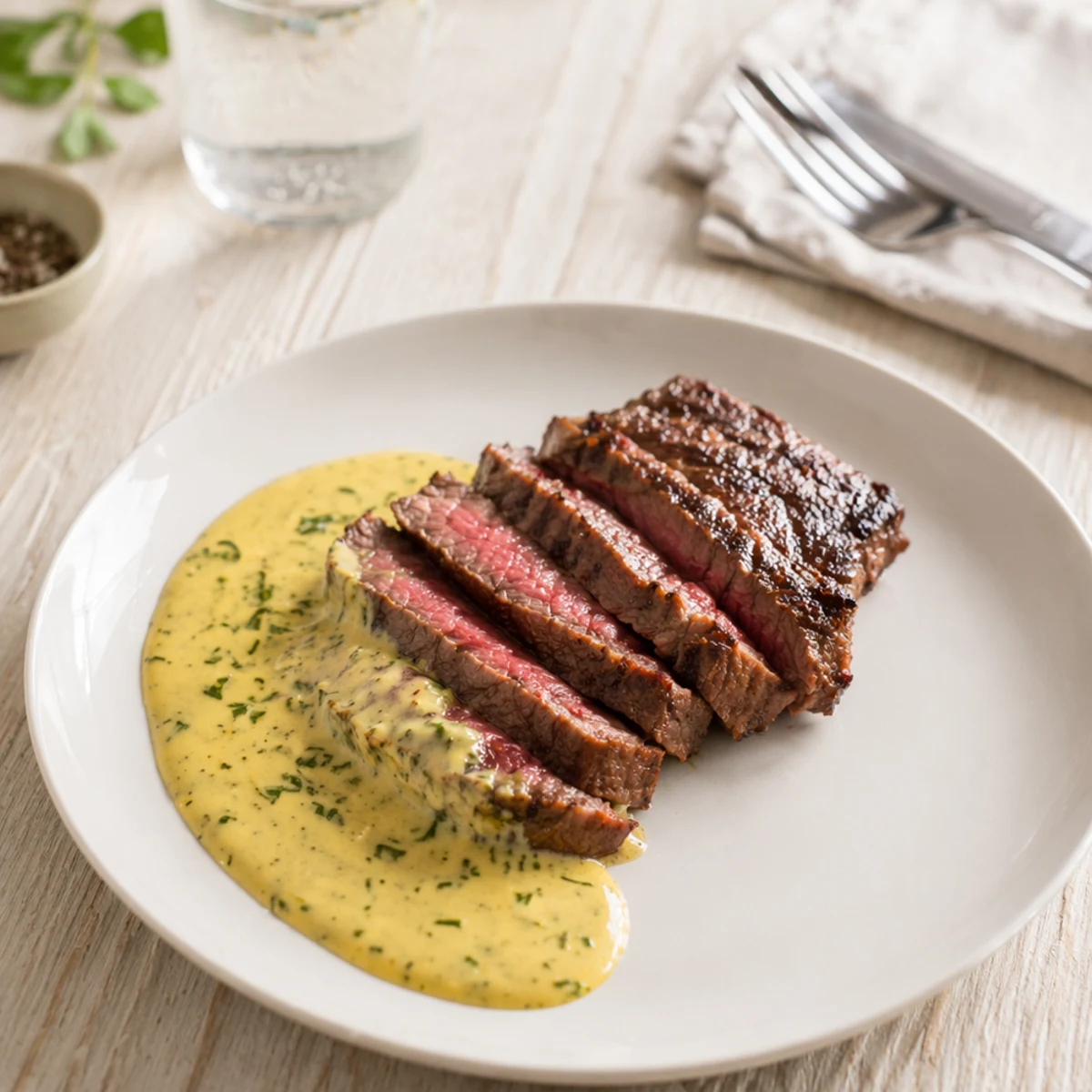
- Plate one entrecôte per person on warm plates. Spoon the Béarnaise sauce generously over the top so it flows slightly down the sides. Finish with a few extra tarragon leaves if you like, and serve immediately while the steak is hot and the sauce is warm.
Nutrition Facts (per serving)
- Calories: 683 kcal
- Protein: 39,7g
- Fat: 52,4g
- Carbohydrates: 3,8g
- Salt: 0,9g
Dietary Information
- Gluten-free
- Contains dairy
- Nut-free
Perfect Wine Pairings
When it comes to wine with Entrecôte with Béarnaise Sauce, the best choices are wines that can handle both the steak’s richness and the sauce’s buttery, herbal intensity. You want enough body to stand up to the beef, enough acidity to cut through the butter, and tannins that are present but not harsh. This is where classic French reds shine, but several California, Oregon, Washington, Spanish, and Italian wines can also work beautifully.
The top verified pairing is Louis Jadot Beaune 1er Cru Les Bressandes from Burgundy, a Pinot Noir with a match score of 88/100. Pinot Noir is a smart fit here because it brings red fruit, earthy depth, and bright acidity without overpowering the sauce. That balance is ideal for a dish like entrecote sauce, where delicacy matters as much as richness.
Another excellent option is Seigneur de Talbot Saint-Julien, a Bordeaux blend with Cabernet Sauvignon, Cabernet Franc, and Merlot, scored at 87/100. This style offers more structure and savory depth, which works especially well if you like your steak with a firmer, more classic red-wine frame. For a slightly more powerful French match, Chambertin-Clos de Bèze Grand Cru also scores 87/100 and brings Pinot Noir elegance with serious complexity.
If you want something a bit more accessible and value-driven, Réserve Côtes-du-Rhône Rouge and Chateau La Tonnelle Haut-Médoc both score 84/100 and offer the kind of ripe fruit, spice, and structure that make them easy to find at Total Wine, Trader Joe’s, BevMo, and local wine shops in the U.S. At a typical price range of $15–30, look for a medium- to full-bodied red with moderate tannins and lively acidity. A Spanish Crianza by El Coto is another smart choice, especially if you enjoy Tempranillo’s savory, oak-kissed profile.
If you’re building a broader steak-and-wine repertoire, our prime rib recipe is a helpful companion to this dish, and our local cheeses with jams guide can help you think about balancing richness, acidity, and texture in a tasting menu.
What to look for in the glass
- Body: medium to medium-full
- Acidity: enough to refresh the palate after each buttery bite
- Tannins: polished, not aggressive
- Flavor profile: red fruit, earth, herbs, spice, and subtle oak
For many home cooks, the best entrecote sauce recipe is the one that feels luxurious but not heavy—and the same logic applies to wine. Choose a bottle that brings freshness, not just power.
Cooking Tips & Techniques
The biggest secret to a great entrecote steak recipe is respecting heat. The steak wants a very hot pan for the sear, but the Béarnaise wants gentle heat. Keep those two temperatures separate in your mind, and the dish becomes much easier to manage.
First, let the steaks come to room temperature before cooking. Cold meat can seize in the pan and cook unevenly. Patting the steaks dry is just as important; moisture on the surface prevents a proper crust. That crust is essential, because it gives the dish the savory depth that balances the sauce.
For the sauce, the most common mistake is overheating the egg yolks. A Béarnaise should be whisked over barely simmering water, never boiling. If you see the sauce getting too thick too quickly, take it off the heat immediately. The warm butter should be drizzled in slowly so the emulsion stays stable. If the sauce looks tight, a teaspoon of warm water can bring it back.
Tarragon is the defining flavor, so use it generously but thoughtfully. Too little, and the sauce loses its identity; too much, and it can dominate the steak. That balance is one reason this entrecote green sauce recipe-style approach feels so refined: it’s herb-forward without becoming sharp.
Finally, rest the meat before serving. Resting lets the juices redistribute, keeping each slice tender and flavorful. It also gives you time to finish the sauce at the last moment, which is when Béarnaise tastes best.
Serving Suggestions
Serve entrecôte with Béarnaise sauce on warm plates so the sauce stays silky and the steak holds its heat. A simple presentation works best: one steak per person, a generous spoonful of sauce, and a final scatter of fresh tarragon leaves for color and aroma. The sauce should flow slightly over the sides of the meat, creating that inviting steakhouse look at home.
For sides, think classic and clean. Crisp fries, roasted potatoes, green beans, or a lightly dressed salad all work well because they balance the richness of the dish. If you want a more substantial table, add crusty bread for catching extra entrecote sauce—no one will complain.
This is a dish that suits a relaxed but polished dinner setting. Candles, a good bottle, and a few thoughtful side dishes are enough to make it feel special. If you’re serving wine, pour it slightly cool for reds like Pinot Noir or Bordeaux blends so the freshness stays lively from first sip to last bite.
Frequently Asked Questions
What wine goes with Entrecôte with Béarnaise Sauce?
The best wine with Entrecôte with Béarnaise Sauce is a medium- to full-bodied red with fresh acidity and moderate tannins. Burgundy Pinot Noir, Bordeaux blends, Côtes-du-Rhône, Rioja Crianza, and polished California reds all work well because they balance the steak’s richness and the sauce’s buttery herbs.
Is Pinot Noir a good wine pairing for entrecôte sauce?
Yes, Pinot Noir is one of the most elegant pairings for entrecote sauce. Its bright acidity, red fruit, and earthy notes complement the tarragon and butter without overwhelming the steak. Look for Oregon or Burgundy Pinot Noir if you want a refined, food-friendly match.
Can I drink Cabernet Sauvignon with Entrecôte with Béarnaise Sauce?
Absolutely. Cabernet Sauvignon can be a great choice if you prefer a firmer, more structured red. It works especially well with the beef itself, while the sauce’s acidity helps keep the pairing balanced. Choose a polished bottle, not an overly tannic one.
What is the best wine for an entrecote steak recipe on a budget?
For a budget-friendly entrecote steak recipe, look for Côtes-du-Rhône Rouge or Rioja Crianza in the $15–30 range. These wines are widely available at Total Wine, Trader Joe’s, BevMo, and many grocery stores, and they offer enough fruit, spice, and freshness to work beautifully.
How do I keep Béarnaise sauce from breaking?
Keep the heat gentle and whisk constantly. Add the butter slowly, and remove the bowl from the heat if the sauce gets too hot. If it starts to look too thick or unstable, whisk in a teaspoon of warm water. A stable Béarnaise should be glossy and spoonable.
What makes this entrecote green sauce recipe different from other steak sauces?
This style of entrecote green sauce recipe stands out because tarragon gives it a bright herbal character that cuts through the butter. Unlike heavier cream sauces, Béarnaise feels lighter on the palate while still tasting rich and luxurious, which makes it ideal for steak.
Conclusion
Entrecôte with Béarnaise sauce is the kind of dish that reminds us how satisfying classic cooking can be. It’s rich, aromatic, and deeply comforting, yet still elegant enough for a special occasion. With the right technique, the right bottle, and a little confidence, this entrecote sauce recipe becomes one of those meals you’ll want to make again and again.
For the best experience, choose a wine that brings freshness, balance, and enough structure to meet the steak and sauce on equal footing. And if you want help finding your perfect match, Gastrona makes exploring wine pairing ideas simple, inspiring, and delicious. From Burgundy Pinot Noir to Bordeaux blends and beyond, your next great dinner is closer than you think.