

Introduction
Filet mignon steak with sauce béarnaise is the kind of dish that turns an ordinary dinner into something memorable. Tender, buttery, and deeply satisfying, it brings together a beautifully seared filet mignon steak, a silky herb-laced sauce, and vegetables that keep the plate feeling elegant rather than heavy. It’s classic steakhouse comfort with a refined edge, and it’s exactly the kind of meal that invites a thoughtful wine pairing.
If you’ve ever wondered what wine goes with filet mignon steak, béarnaise is the clue. The sauce adds richness, the tarragon brings a bright herbal note, and the beef offers enough depth to stand up to wines with structure, freshness, and a touch of elegance. Whether you’re planning a date night, a holiday dinner, or simply want to master a restaurant-style filet mignon steak recipe at home, this dish delivers. And with Gastrona, finding the right wine recommendation becomes part of the fun, not a chore.
About This Dish
Filet pur sauce béarnaise is a dish with French roots and international appeal. In French cuisine, “filet pur” refers to the most tender cut of beef tenderloin, prized for its delicate texture and subtle flavor. Béarnaise sauce, one of the great classic French sauces, is a close cousin of hollandaise, built from egg yolks, butter, vinegar, white wine, shallots, and tarragon. Together, they create a luxurious balance of richness and brightness.
What makes this dish special is that it celebrates contrast. The filet mignon steak is lean and tender, with a clean beef flavor that feels elegant rather than aggressive. The béarnaise adds body and perfume, but the tarragon keeps it from feeling too heavy. That balance is why the dish has become a restaurant favorite and a home-cook showstopper alike. It feels special enough for celebrations, yet straightforward enough to master with a little care.
In American food culture, steak dinners remain a beloved centerpiece, but today’s diners often want more than just a heavy plate. They want flavor, texture, and a wine pairing that feels intentional. This is where filet mignon steak shines. It works beautifully for those who love classic steakhouse dining, but it also fits the modern table, where French technique and accessible ingredients meet. If you enjoy dishes like fettuccine alfredo or other creamy, indulgent plates, you’ll appreciate the same sense of comfort here—just in a more refined, savory form.
Key Ingredients & Their Role
The heart of this filet mignon steak recipe is, of course, the beef tenderloin medallion. Tenderloin is known for its fine grain, soft texture, and mild flavor. Because it is so lean, it benefits from high-heat searing and a rich sauce. That’s where the béarnaise comes in: it coats the palate with buttery silkiness while the vinegar and wine reduction cuts through the richness.
Butter is essential in two places here. First, it helps build the sauce’s lush texture. Second, it contributes to the steak’s golden crust in the pan. The key is balance—too much heat and the butter burns, too little and the steak won’t develop that deep, savory exterior. Tarragon is the signature herb in béarnaise, and it’s what gives the sauce its unmistakable aroma: slightly anise-like, fresh, and green. It lifts the whole dish and makes each bite taste more alive.
Shallots, white wine vinegar, and dry white wine form the acidic backbone of the sauce. They provide brightness and complexity, which is crucial when pairing wine with a rich dish. The vegetables—asparagus, green beans, and carrots—add color, texture, and freshness. They also make the plate feel complete, with enough vegetal sweetness to echo the wine’s fruit.
For anyone exploring steak and wine pairing, this is a great example of how fat, acid, and herbaceous notes shape the bottle choice. If you enjoy reading about savory pairings like quattro formaggi pizza recipe, you’ll notice the same principle at work: rich food needs freshness, structure, and a wine that can keep pace without overwhelming the dish.
Recipe
Filet pur sauce béarnaise
Prep Time: 45 minutes Cook Time: 15 minutes Total Time: 60 minutes Servings: 4 Difficulty: Moderate
Ingredients
- 4 medallions, 6 oz each Beef tenderloin medallions, trimmed, about 1 1/2 inches thick
- 1 tsp, divided, adjust to taste Kosher salt
- 1 tsp, divided, adjust to taste Freshly ground black pepper
- 1 tbsp Neutral oil
- 14 tbsp, divided Unsalted butter
- 3 tbsp Shallots, finely minced
- 1/4 cup White wine vinegar
- 1/4 cup Dry white wine
- 1 small bunch Fresh tarragon stems and leaves, separated
- 3 large Egg yolks
- 1 tbsp Water
- 1 lb Asparagus, woody ends trimmed
- 8 oz Green beans, trimmed
- 2 medium Carrots, peeled and cut into thin batons
Instructions
- Pat the beef tenderloin medallions dry with paper towels. Season both sides with 3/4 tsp kosher salt and 3/4 tsp black pepper. Let stand at room temperature for 20 minutes while you prepare the sauce base and vegetables.
- Finely mince the shallots. Strip the tarragon leaves from the stems. Set aside 1 tbsp finely chopped tarragon leaves for the sauce and a little extra for garnish. In a small saucepan, combine the shallots, white wine vinegar, white wine, and the tarragon stems.
- Bring the saucepan to a simmer over medium heat and reduce until about 2 tbsp liquid remain, 5 to 7 minutes. Strain into a heatproof bowl, pressing lightly on the shallots and stems, then discard the solids. Let the reduction cool for 2 minutes.
- Melt 12 tbsp unsalted butter over low heat until fully melted and warm but not browned. Keep it warm off the heat.
- Bring a pot of salted water to a boil. Add the asparagus, green beans, and carrots and cook until just tender-crisp, 3 to 4 minutes. Drain and immediately rinse briefly under cool water or spread on a tray so they stop cooking. Set aside.
- For the béarnaise, set the bowl with the reduction over a saucepan of barely simmering water, making sure the bottom does not touch the water. Whisk in the egg yolks and 1 tbsp water. Whisk constantly until the mixture becomes pale, thick, and forms ribbons, about 2 to 4 minutes.
- Remove the bowl from the heat. Very slowly whisk in the warm melted butter, starting drop by drop, then in a thin steady stream, leaving behind any milky solids at the bottom if desired. Whisk in the chopped tarragon leaves. Season lightly with the remaining 1/4 tsp salt and a pinch of the remaining pepper. Keep warm in a lukewarm spot; do not let it get hot or it may break.
- Heat a large heavy skillet over medium-high heat until very hot. Add the neutral oil and 1 tbsp unsalted butter. When the butter foam subsides, add the beef medallions. Sear until deeply browned, about 3 to 4 minutes on the first side.
- Turn the medallions and cook 3 to 4 minutes more for medium-rare, or until the internal temperature reaches 130 to 135°F. Reduce the heat slightly if needed so the butter does not burn. Transfer the beef to a plate and let rest, tented loosely with foil, for 5 to 8 minutes.
- While the beef rests, return the skillet to medium heat. Add the blanched asparagus, green beans, and carrots and sauté for 2 to 3 minutes until hot and lightly glazed in the pan juices. Season to taste with salt and pepper.
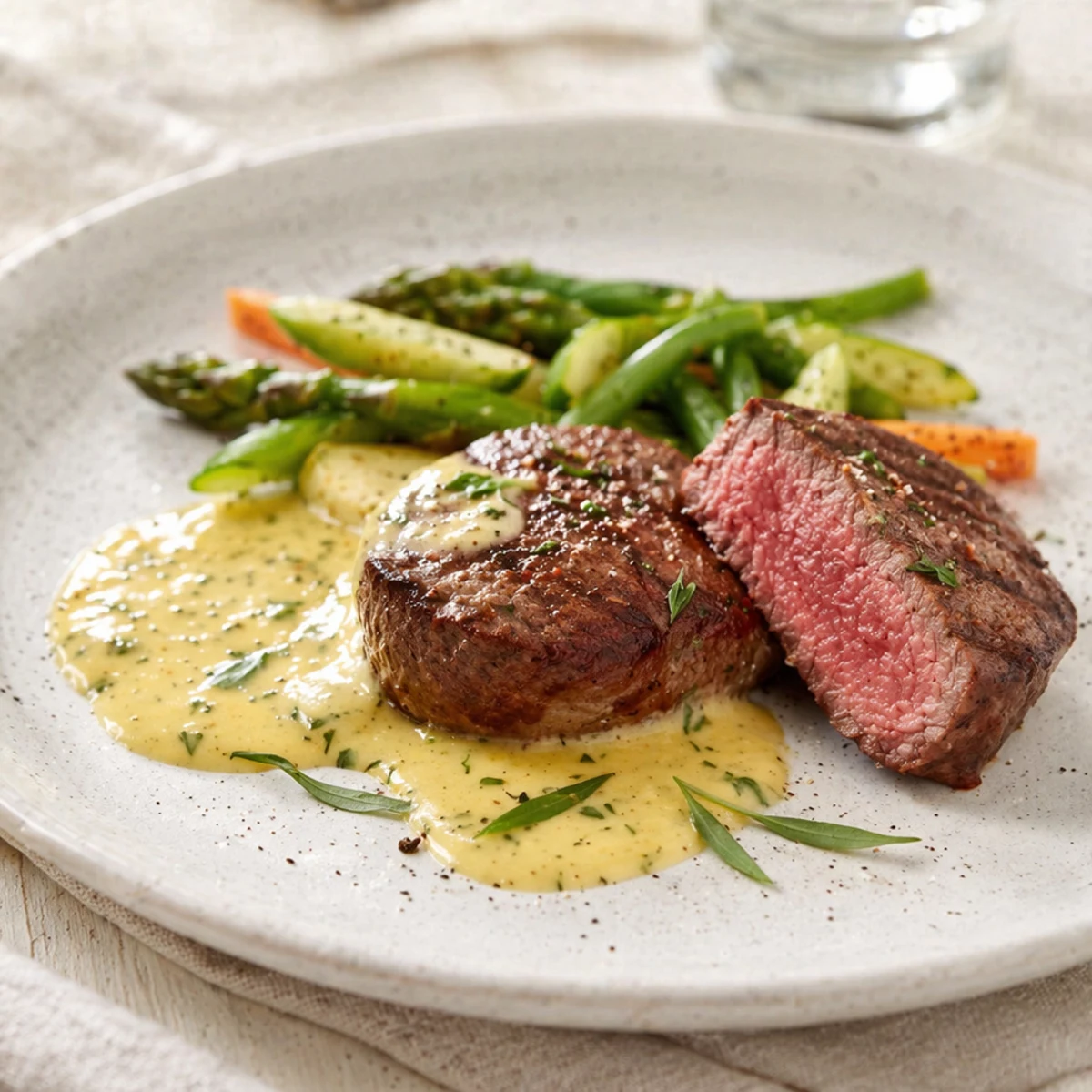
- To plate, spoon béarnaise sauce onto warm dinner plates. Set one beef medallion on each plate and arrange the vegetables to the side. Spoon a little more sauce over or beside the beef, not covering the crust completely. Garnish with a few chopped tarragon leaves and serve immediately while hot. Season to taste with salt and pepper.
Nutrition Facts (per serving)
- Calories: 612 kcal
- Protein: 39.8g
- Fat: 45.2g
- Carbohydrates: 10.5g
- Salt: 1.0g
Dietary Information
Gluten-free, Contains dairy, Nut-free
Perfect Wine Pairings
A great wine pairing for filet mignon steak with béarnaise should do three things: respect the tenderness of the beef, cut through the buttery sauce, and echo the herbaceous tarragon. That usually means medium-bodied reds with bright acidity, polished tannins, and enough savory depth to feel at home beside the sauce.
The strongest verified match is Louis Jadot Beaune 1er Cru Les Bressandes from Burgundy, a Pinot Noir with a 92/100 pairing score. Burgundy Pinot Noir is a natural fit because it brings red fruit, earth, and freshness without overpowering the filet mignon steak. The wine’s elegance mirrors the cut, while its acidity helps lift the béarnaise. If you want a classic French pairing that feels especially refined, this is the one to look for at Total Wine or a good local wine shop.
Another excellent option is Chambertin-Clos de Bèze Grand Cru by Chanson, also from France and also Pinot Noir, with a 90/100 score. This is a more prestigious, deeper expression of Burgundy, ideal when you want a special-occasion bottle. It has the structure for filet mignon steak and the finesse to stay graceful with the sauce.
For a slightly more affordable style, Saute Rocher Rouge from Montpeyroux offers a blend of Syrah, Cabernet Sauvignon, Merlot, and Marselan with an 84/100 score. Its darker fruit and savory spice make it a good match for the seared crust on grilled filet mignon or pan-seared tenderloin. You may also find appealing value in Barbera d’Asti Superiore, which brings lively acidity and a food-friendly profile that works especially well with béarnaise’s richness.
If you prefer American wines, look for Pinot Noir from Oregon or California’s Sonoma Coast, or a restrained Cabernet Sauvignon from Napa or Washington State. In the U.S. market, these styles are widely available at Trader Joe’s, BevMo, grocery stores, and Total Wine, often in the $15–30 range. For a more structured red, Aranjuez Cabernet Sauvignon from Bolivia is another verified option with an 82/100 score, especially if you like a firmer, more classic steakhouse feel.
In short: for filet mignon steak wine pairing, start with Pinot Noir, then move to elegant Cabernet or a balanced Italian red if you want more body. Gastrona can help you compare those styles and find the right bottle for your table.
Cooking Tips & Techniques
The secret to a memorable filet mignon steak is not complicated, but it does demand attention. First, dry the meat well before seasoning. Moisture on the surface prevents browning, and browning is where much of the flavor lives. Letting the steaks sit at room temperature for a short time also helps them cook more evenly.
For the béarnaise, temperature control is everything. The yolks need gentle heat to thicken, and the butter must be added slowly so the emulsion stays stable. If the sauce gets too hot, it can break. If it is too cold, it can become thin. Keep it warm, not hot, and whisk patiently. This is the kind of technique that separates a good filet mignon steak recipe from a great one.
Another tip: don’t overcook the beef. Filet mignon steak is prized for tenderness, and medium-rare is usually the sweet spot. Use an instant-read thermometer if you can. Resting the meat after searing is just as important as cooking it; it keeps the juices where they belong.
Finally, season in layers. The vegetables should taste bright and lightly salted, the sauce should be balanced, and the beef should be deeply savory. That layered seasoning is what makes the whole plate feel restaurant-worthy.
Serving Suggestions
Serve filet mignon steak with warm plates so the béarnaise stays glossy and the beef remains hot from first bite to last. A small pool of sauce beneath the steak, plus a little extra on the side, looks elegant and keeps the crust visible. The vegetables should be arranged neatly, almost like a frame around the main event.
For the table, keep the setting simple and polished. A crisp white napkin, good stemware, and a bottle opened a little before dinner all help create the right mood. If you’re serving this for a special evening, a loaf of crusty bread is a smart addition, but keep sides restrained so the filet mignon steak remains the star.
This dish pairs beautifully with a quiet, intimate dinner, but it also works for a celebratory meal with friends who appreciate a thoughtful wine recommendation. If you’re building a menu, think in terms of freshness and balance rather than excess.
Frequently Asked Questions
What wine goes with filet mignon steak and béarnaise sauce?
The best wine with filet mignon steak and béarnaise is usually a medium-bodied red with bright acidity and soft tannins, especially Pinot Noir. Burgundy Pinot Noir is a classic choice because it complements the tender beef and cuts through the buttery sauce without overwhelming the tarragon.
Is Pinot Noir the best wine pairing for filet mignon steak?
Pinot Noir is one of the best wine pairings for filet mignon steak because it has elegance, freshness, and enough structure for the dish. Oregon and Burgundy Pinot Noir are especially strong options. If you prefer more body, a restrained Cabernet Sauvignon or Barbera can also work well.
Can I serve Cabernet Sauvignon with filet mignon steak?
Yes, Cabernet Sauvignon can work very well with filet mignon steak, especially if you like a more classic steakhouse feel. Choose one with polished tannins and not too much oak. A balanced Napa, Sonoma, or Washington Cabernet is a smart choice for this pairing.
What is the best wine for filet mignon steak recipe at home?
For a home-cooked filet mignon steak recipe, look for a wine that feels special but still affordable. In the U.S., that often means Oregon Pinot Noir, Sonoma Pinot Noir, or a value-driven French red. Bottles in the $15–30 range from Total Wine, Trader Joe’s, or local wine shops can be excellent.
Does béarnaise sauce change the wine pairing?
Yes, béarnaise sauce changes the pairing because it adds butter, egg yolk, vinegar, and tarragon. That means the wine needs enough acidity to refresh the palate and enough finesse to work with the herbs. That’s why Pinot Noir and other lively reds are often better than very heavy wines.
What is the best wine recommendation for grilled filet mignon?
For grilled filet mignon, look for wines with a touch more structure and savory depth, such as Sonoma Coast Pinot Noir, Washington Cabernet Sauvignon, or a Barbera d’Asti Superiore. The grill adds char, which can handle a slightly bolder wine while still keeping the pairing balanced.
Conclusion
Filet mignon steak with sauce béarnaise is proof that a classic dish can still feel exciting at home. With its buttery sauce, tender beef, and fresh tarragon lift, it offers the perfect canvas for a thoughtful wine pairing. Whether you choose a Burgundy Pinot Noir, a graceful Oregon red, or a well-balanced Cabernet, the right bottle can make the meal feel even more special.
If you’ve been searching for the best wine for filet mignon steak, this is your sign to cook it, pour it, and enjoy the moment. With Gastrona, discovering the ideal pairing becomes easy, approachable, and genuinely fun. Filet mignon steak deserves a wine that matches its elegance—and now you know exactly where to start.