

Introduction
Pistachio pannacotta is the kind of dessert that feels effortlessly elegant: cool, silky, lightly nutty, and just sweet enough to leave you wanting one more spoonful. In a world of heavy cakes and elaborate pastries, this Italian classic stands out for its simplicity and refinement. The gentle richness of cream and the soft, earthy perfume of pistachio create a dessert that is both comforting and sophisticated. For home cooks and wine lovers alike, it’s also a dream to pair. The right wine pairing can lift the nutty flavor, echo the creamy texture, and turn a simple ending into a memorable finish. If you’ve been searching for the best wine for Pistachio Pannacotta, you’re in the right place.
This guide explores not only how to make the dessert, but also how to choose a wine recommendation that feels like a perfect match. Whether you’re planning a dinner party, a date-night dessert, or simply want to level up a weeknight treat, pistachio pannacotta offers a beautiful canvas for sweet, aromatic wines. And with Gastrona, finding the right wine pairing becomes easy, fun, and deliciously approachable.
About This Dish
Pannacotta, which means “cooked cream” in Italian, is a dessert rooted in the northern regions of Italy, where dairy-rich sweets have long been part of the culinary landscape. Traditional pannacotta is known for its smooth, wobbling texture and subtle flavor, making it a wonderful base for all kinds of infusions. Pistachio is a particularly graceful variation because it adds depth without overpowering the dessert. Its flavor is delicate but distinctive: buttery, lightly roasted, and slightly sweet, with a green, almost floral character that feels luxurious on the palate.
What makes pistachio pannacotta so special is its balance. It is rich, but not heavy. Sweet, but not cloying. Simple, but undeniably refined. That balance is exactly why it works so well in a wine pairing context. The dessert has enough fat from the cream to soften the edges of sweet wines, while the pistachio adds a savory-nutty note that can harmonize beautifully with aromatic grapes and fortified styles.
In American food culture, where diners increasingly appreciate both classic European desserts and thoughtful wine pairing, pistachio pannacotta fits right in. It feels restaurant-worthy, yet it’s achievable at home. If you enjoy elegant desserts like sushi tacos as playful dinner-party starters, this is the kind of finale that completes the experience with style.
Key Ingredients & Their Role
At the heart of pistachio pannacotta are just a few ingredients, but each one has a clear purpose. Pistachios bring the signature flavor: nutty, slightly sweet, and aromatic. When finely ground into a paste, they release oils that enrich the cream and give the dessert its distinctive color and perfume. Using unsalted, shelled pistachios is important because it keeps the flavor clean and allows the natural sweetness to shine.
Heavy cream provides the lush, velvety body that makes pannacotta so satisfying. It creates the dessert’s luxurious mouthfeel and carries the pistachio flavor beautifully. Sugar adds balance, enhancing the nut’s natural sweetness without making the dessert taste overly sugary. Vanilla extract rounds out the flavor profile, adding warmth and a soft floral note that bridges the cream and pistachio.
Gelatin is the structural element that transforms the mixture from a flavored cream into a set dessert with that signature delicate wobble. The goal is not firmness, but elegance: just enough stability to hold its shape while remaining tender on the spoon. The garnish of finely chopped pistachios adds texture and a fresh aromatic finish.
From a wine pairing perspective, these ingredients matter because they shape the ideal match. Cream calls for acidity to keep the palate fresh. Pistachio welcomes wines with nutty, honeyed, or floral notes. Sugar means the wine should be at least as sweet as the dessert, or it may taste flat. That’s why sweet sparkling wines, late-harvest styles, and fortified wines often make the best wine for Pistachio Pannacotta. If you’re interested in how ingredients guide pairings, you may also enjoy our best way to reheat steak guide for a completely different but equally practical look at technique and flavor.
Recipe
Pistachio Pannacotta
Prep Time: 15 minutes Cook Time: 5 minutes Total Time: 20 minutes Servings: 4 Difficulty: Moderate
Ingredients
- 80g Pistachios (unsalted, shelled)
- 500ml Heavy cream
- 3 Gelatin sheets
- 80g Sugar (granulated)
- 1 tsp Vanilla extract
- 20g Pistachio nuts (finely chopped, for garnish)
Instructions
- Soak the gelatin sheets in cold water for 5 minutes until soft.
- Finely grind the pistachios using a food processor until they reach a paste-like consistency. Set aside.
- In a medium saucepan, combine heavy cream, sugar, and vanilla extract. Heat gently over medium-low heat, stirring constantly, until the sugar dissolves and the mixture is hot (do not boil).
- Remove the saucepan from heat and add the pistachio paste to the cream mixture. Use a hand blender to ensure the paste combines well and the mixture is smooth.
- Squeeze the gelatin sheets to remove excess water and add them to the warm pistachio-cream mixture. Stir until the gelatin is fully dissolved.
- Strain the mixture through a fine mesh sieve into a jug to remove any lumps or larger pistachio pieces. This step ensures a silky texture.
- Pour the strained mixture evenly into 4 serving molds or ramekins. Allow them to cool to room temperature before transferring them to the refrigerator.
- Refrigerate for at least 4 hours, or until the panna cotta is fully set.
- To serve, gently run a knife around the edges of the molds and invert them onto serving plates. If necessary, briefly dip the molds in warm water to loosen the panna cotta.
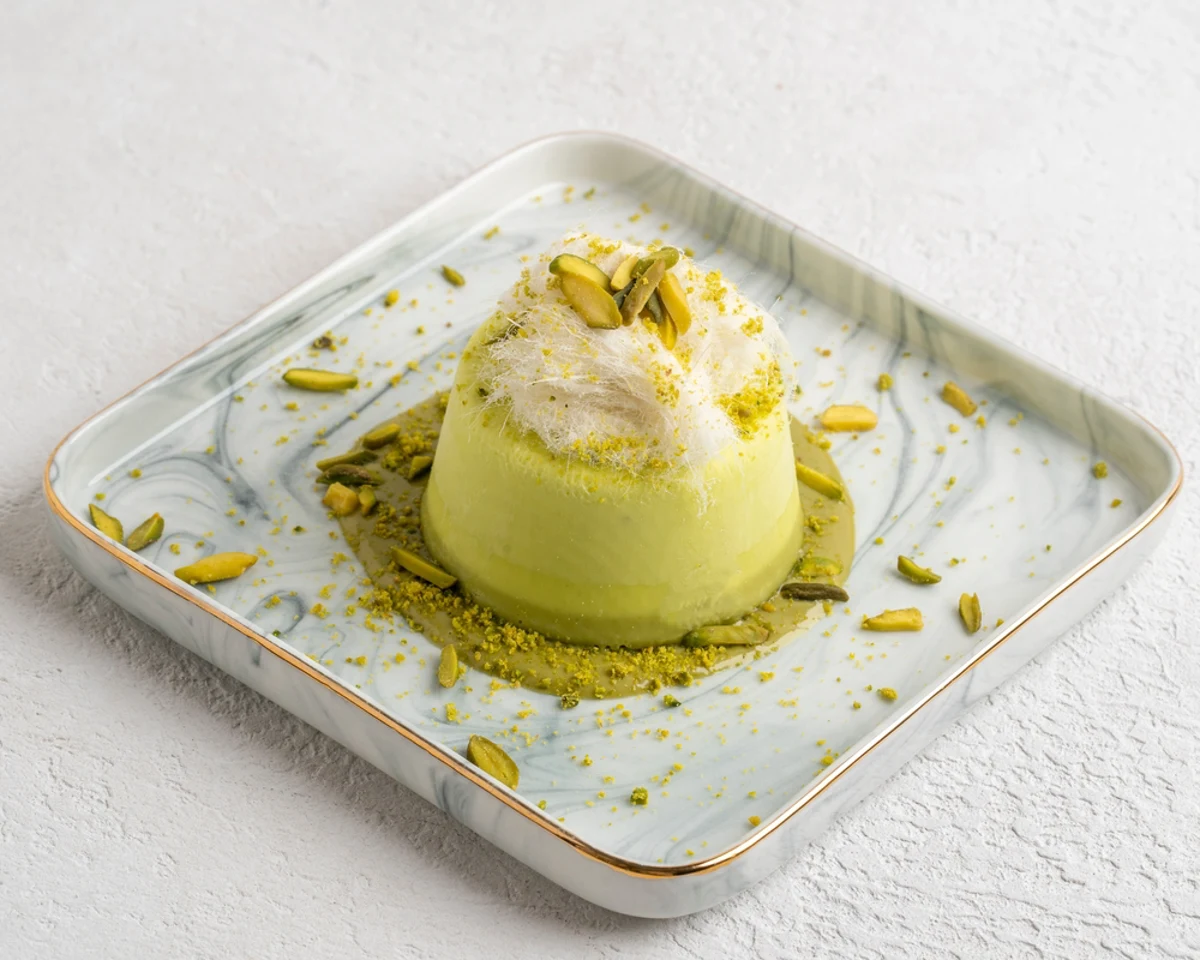
- Garnish each panna cotta with finely chopped pistachios. For a more luxurious presentation, add a light dusting of ground pistachios around the plate. Serve immediately.
Nutrition Facts (per serving)
- Calories: 320 kcal
- Protein: 6.0g
- Fat: 22.0g
- Carbohydrates: 24.0g
- Salt: 0.1g
Dietary Information
Gluten-free, Contains dairy, Contains nuts
Perfect Wine Pairings
The best wine with Pistachio Pannacotta needs to do three things well: match the dessert’s sweetness, complement its creamy texture, and echo the pistachio’s nutty character. Because this dessert is rich and delicately sweet, dry wines usually fall short. They can taste sharp or thin next to the cream. Instead, look for wines with noticeable residual sugar, bright acidity, and aromatic complexity. That balance is the key to a true perfect match.
One of the strongest options is Moscato d’Asti by Castiôn from Piemonte, Italy. With a 92/100 match score, it offers the kind of gentle sweetness and fragrant lift that works beautifully with pistachio. Its light sparkle and floral, peachy profile keep the dessert feeling fresh rather than heavy. This is a lovely wine recommendation for anyone who wants something approachable and easy to find at retailers like Total Wine, Trader Joe’s, BevMo, or a good local wine shop. Expect a friendly price point in the US market, often around the $15–30 range depending on store and availability.
Another excellent choice is Recioto della Valpolicella Classico by Domìni Veneti from Veneto, Italy, also scoring 92/100. This richer, more contemplative style brings dried cherry, cocoa, and a velvety sweetness that can create a luxurious contrast with the nutty creaminess of the dessert. It’s a terrific option if you want a more dramatic, dinner-party-style pairing.
For a more decadent route, Inniskillin Riesling Icewine by Inniskillin Wines from Niagara Peninsula, Canada is a standout. The 92/100 score reflects how well its high acidity and concentrated honeyed fruit cut through the cream while highlighting the pistachio’s sweetness. If you prefer an elegant, polished finish, this is one of the best wine for Pistachio Pannacotta choices.
Finally, Rivesaltes Ambré by Gérard Bertrand from Roussillon, France and Tokaji Aszù 5 Puttonyos by Château Dereszla from Tokaj, Hungary offer beautiful old-world complexity. Rivesaltes Ambré brings caramelized, nutty, and oxidative notes that mirror the dessert’s richness, while Tokaji adds apricot, honey, and vibrant acidity. If you’re browsing wine recommendation options in the US, these styles may appear less often than Moscato or Riesling-based dessert wines, but they’re worth asking for at specialty wine shops.
If you want the most accessible path, start with Moscato d’Asti. If you want the most luxurious, go with Icewine or Tokaji. For a deeper, more layered pairing, Recioto is a standout. Any of these can turn pistachio pannacotta into a memorable finale and prove that a smart wine pairing doesn’t have to be complicated.
Cooking Tips & Techniques
The biggest secret to great pistachio pannacotta is restraint. Heat the cream gently and never let it boil; boiling can dull the flavor and affect the final texture. When you add the pistachio paste, use a hand blender long enough to create a smooth, unified mixture. This step helps the nut flavor disperse evenly, so every spoonful tastes balanced.
Straining the mixture is not optional if you want a truly silky dessert. Even well-processed pistachios can leave tiny bits behind, and those can interrupt the luxurious texture that makes pannacotta so appealing. If you want a more intense pistachio flavor, grind the nuts very finely and let them sit briefly in the warm cream before blending. Just avoid overprocessing to the point of oil separation.
Gelatin handling matters too. Make sure the sheets are fully softened before adding them to the warm mixture, and always squeeze out excess water so you don’t dilute the dessert. If your kitchen is warm, work efficiently once the mixture is ready so it can begin setting without delay.
A common mistake is rushing the chilling time. Pannacotta needs at least four hours, but overnight is even better if you want the cleanest unmolding. For a smoother release, lightly oil the molds or use ramekins with a quick warm-water dip. These small techniques make the difference between a good dessert and a restaurant-quality one.
Serving Suggestions
Pistachio pannacotta looks especially elegant when served on simple white plates that let its pale green tone stand out. A few chopped pistachios on top add texture, while a dusting around the plate creates a polished, professional finish. If you want to lean into a more refined presentation, add a tiny spoonful of fruit compote or a few fresh berries on the side for color contrast.
This dessert works beautifully after a spring or early summer meal, especially one built around seafood, roasted chicken, or Mediterranean flavors. Because it is creamy and sweet, it pairs well with a light, calm dining atmosphere rather than a very heavy menu. Serve it slightly chilled, not icy cold, so the pistachio aroma and vanilla notes can open up.
For the wine service, pour the dessert wine in smaller glasses and serve it alongside the plated pannacotta rather than in a separate round. That creates a more intentional tasting experience. If you’re hosting, Gastrona can help you fine-tune the pairing so the dessert and wine feel perfectly matched from first bite to last sip.
Frequently Asked Questions
What wine goes with Pistachio Pannacotta?
The best wine with Pistachio Pannacotta is usually a sweet, aromatic style with enough acidity to balance the cream. Moscato d’Asti, Icewine, Recioto, Tokaji, and Rivesaltes Ambré are all excellent choices. Look for floral notes, bright fruit, and a sweet finish so the wine complements rather than competes with the dessert.
Is Moscato a good wine pairing for Pistachio Pannacotta?
Yes, Moscato is one of the easiest and most crowd-pleasing wine pairing options for Pistachio Pannacotta. Its light sweetness, gentle bubbles, and fragrant fruit notes work beautifully with the nutty creaminess of the dessert. It’s also widely available in the United States at stores like Total Wine and Trader Joe’s.
What is the best wine for Pistachio Pannacotta if I want a more luxurious pairing?
If you want a more luxurious wine recommendation, try Icewine, Tokaji Aszù, or Recioto della Valpolicella Classico. These wines bring concentrated sweetness, layered aromas, and enough acidity or structure to make the dessert taste even more refined. They’re ideal for special occasions and dinner parties.
Can I serve dry wine with Pistachio Pannacotta?
Dry wine is usually not the best match for Pistachio Pannacotta because the dessert’s sweetness can make the wine taste sour or thin. If you prefer a less sweet option, choose a gently off-dry wine with floral or fruity notes. In general, a sweeter style gives a much better balance.
Where can I buy wine for Pistachio Pannacotta in the United States?
You can often find suitable wine for Pistachio Pannacotta at Total Wine, Trader Joe’s, BevMo, grocery stores, and local wine shops. Moscato d’Asti and Riesling-based dessert wines are usually the easiest to locate, while Tokaji, Recioto, and Rivesaltes may be more common at specialty retailers.
How do I choose the perfect match for Pistachio Pannacotta and wine pairing?
Choose a wine with sweetness equal to or greater than the dessert, plus enough acidity to keep the palate fresh. For Pistachio Pannacotta, aromatic grapes and dessert wines with honeyed, floral, or nutty notes usually work best. Gastrona can help you compare styles and find the perfect match quickly.
Conclusion
Pistachio pannacotta is proof that simple desserts can feel truly special. With its creamy texture, gentle sweetness, and elegant pistachio flavor, it invites a thoughtful wine pairing that adds even more pleasure to the table. Whether you reach for Moscato d’Asti, Icewine, Tokaji, or a rich Recioto, the right bottle turns this dessert into a memorable experience.
If you’ve been looking for the best wine for Pistachio Pannacotta, start with the styles in this guide and explore what suits your taste. And if you want an easier way to discover your next perfect match, Gastrona is the ideal companion for food lovers who want to pair with confidence.