

Introduction
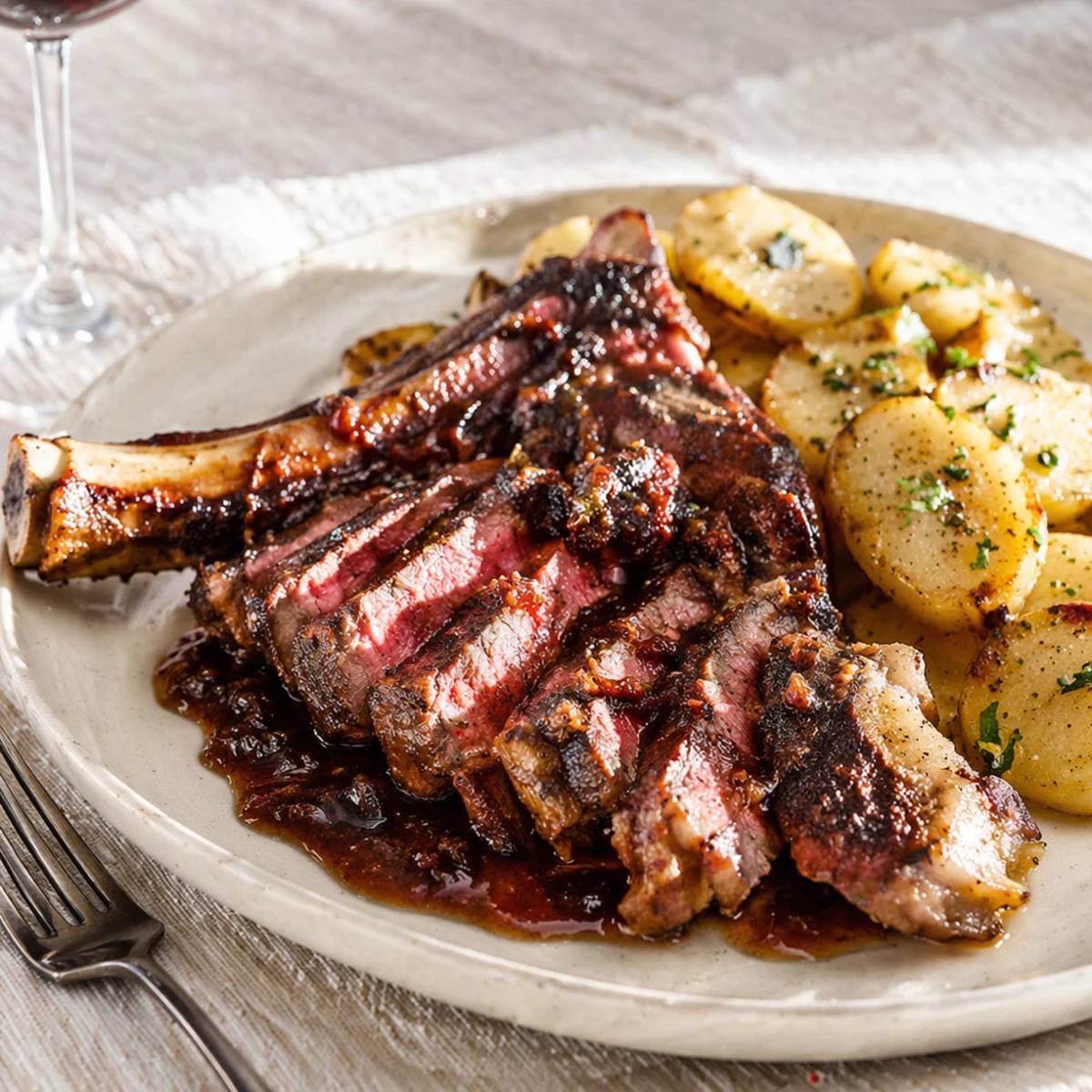
If you’re looking for a rib steak recipe that feels restaurant-worthy but still totally doable at home, this is it. Rib steak with Bordelaise sauce is the kind of dinner that turns an ordinary evening into a celebration: deeply seared beef, a glossy red wine sauce, and buttery potatoes that soak up every last drop. It’s rich, savory, and full of that irresistible umami that makes you want another bite before you’ve finished the first.
This rib steak recipe also happens to be a dream for wine lovers. The sauce’s Bordeaux roots naturally invite classic French reds, while the steak’s marbling gives you room to explore bold California Cabernet, polished Washington blends, or elegant Old World bottles. If you’ve ever wondered what wine goes with rib steak with Bordelaise sauce, you’re in the right place. With the right pairing, the whole plate becomes greater than the sum of its parts.
About This Dish
Rib Steak with Bordelaise Sauce sits at the intersection of French technique and steakhouse comfort. Bordelaise sauce, traditionally made with red wine, shallots, and beefy depth, comes from the Bordeaux region of France, where wine is not just an ingredient but a way of life. Pairing it with a rib steak makes perfect sense: the cut brings tenderness, fat, and a pronounced beef flavor, while the sauce adds acidity, gloss, and aromatic complexity.
What makes this rib steak recipe especially appealing is its balance of luxury and familiarity. It has the kind of refinement you’d expect from a fine dining menu, but the flavors are direct and satisfying. In American food culture, where steak dinners often signal comfort, celebration, or a special weekend meal, this dish feels instantly at home. It also reflects the modern way we eat in the U.S.: classic French inspiration, but with room for accessible ingredients and wines you can find at Total Wine, Trader Joe’s, BevMo, or your favorite local shop.
The addition of Sarladaise potatoes brings the dish into even richer territory. Crisp-edged, buttery, and infused with garlic and herbs, they echo the steak’s savory intensity without overwhelming it. If you enjoy elevated comfort food like potato gnocchi with butter and sage, this rib steak recipe offers the same kind of indulgence, just in a more dramatic, wine-friendly form.
Key Ingredients & Their Role
The beauty of this rib steak recipe lies in how each component contributes to the overall flavor profile. First, the rib steak itself. Rib steak is prized for marbling, which melts during cooking and creates a juicy, flavorful bite. That fat is key: it gives the steak enough richness to stand up to a sauce with wine and aromatics. For best results, choose a steak with good marbling, a generous thickness, and a deep red color.
Next comes Bordelaise sauce, the soul of the dish. A classic Bordelaise typically starts with shallots, red wine, and a beef-based reduction. The wine brings acidity and dark fruit notes; the shallots add sweetness and perfume; the reduction concentrates everything into a silky, savory glaze. In a rib steak recipe, this sauce does more than add flavor — it ties the whole plate together and creates a natural bridge to wine pairing.
Sarladaise potatoes are the supporting act that never feels secondary. Their crisp, golden edges and rich interior make them an ideal partner for steak and sauce. Garlic and herbs brighten the potatoes just enough to keep the dish from feeling too heavy. If you like bold, satisfying dinners such as a pasta with sausage and broccoli rabe, you’ll appreciate how these potatoes bring both comfort and contrast.
From a pairing perspective, the key is harmony. This rib steak recipe needs wines with enough body to match the beef, enough acidity to cut through the sauce, and enough structure to handle the fat. That’s why Cabernet-based wines, especially from Bordeaux and California, are such natural choices.
Recipe
Rib Steak with Bordelaise Sauce
Prep Time: 20 minutes Cook Time: 35 minutes Total Time: 55 minutes Servings: 2 Difficulty: Intermediate
Ingredients
For the rib steak
- 2 rib steaks, about 1 to 1 1/2 inches thick
- 2 teaspoons kosher salt
- 1 teaspoon freshly ground black pepper
- 1 tablespoon neutral oil
- 2 tablespoons unsalted butter
- 2 garlic cloves, smashed
- 2 thyme sprigs
For the Bordelaise sauce
- 2 shallots, finely minced
- 1 tablespoon butter
- 1 cup dry red wine
- 1 cup beef stock
- 1 thyme sprig
- 1 small bay leaf
- 1 teaspoon cracked black pepper
- 1 tablespoon cold butter, for finishing
- Salt to taste
For the Sarladaise potatoes
- 1 pound small Yukon Gold potatoes, sliced into rounds
- 2 tablespoons duck fat or butter
- 2 garlic cloves, minced
- 1 tablespoon chopped parsley
- Salt and pepper to taste
Instructions
- Prepare the potatoes. Boil the sliced potatoes in salted water for 6 to 8 minutes until just tender. Drain and pat dry.
- Cook the potatoes. Heat duck fat or butter in a skillet over medium-high heat. Add the potatoes and cook until golden and crisp on both sides, about 10 to 12 minutes. Stir in garlic and parsley at the end. Season to taste.
- Make the Bordelaise sauce. In a saucepan, melt 1 tablespoon butter over medium heat. Add shallots and cook until soft, about 2 minutes.
- Reduce the wine. Pour in the red wine, thyme, bay leaf, and black pepper. Simmer until reduced by half.
- Add the stock. Pour in beef stock and continue simmering until the sauce is glossy and lightly thickened. Strain if desired.
- Finish the sauce. Whisk in cold butter for shine and richness. Season with salt.
- Cook the steaks. Pat the rib steaks dry and season generously with salt and pepper. Heat oil in a cast-iron skillet over high heat until shimmering. Sear the steaks 3 to 4 minutes per side for medium-rare, depending on thickness.
- Baste and rest. Add butter, garlic, and thyme to the pan. Baste the steaks for 1 to 2 minutes, then rest them for 5 to 10 minutes.
- Serve. Plate the potatoes, top with sliced rib steak, and spoon Bordelaise sauce over the meat.
Nutrition Facts
Per serving, approximate:
- Calories: 820
- Protein: 48g
- Fat: 58g
- Carbohydrates: 22g
- Fiber: 3g
- Sugars: 4g
- Sodium: 780mg
Dietary Information
- Contains: dairy
- Gluten-free: yes
- Low-carb: moderate
- Keto-friendly: yes, with minor potato adjustments
- Not suitable for: vegetarian or vegan diets
Perfect Wine Pairings
The best wine pairing for this rib steak recipe should do three things: match the steak’s richness, complement the Bordelaise sauce, and refresh the palate between bites. That means looking for wines with medium-plus to full body, firm but not aggressive tannins, and enough acidity to keep the dish lively. Because the sauce is built on red wine and shallots, Bordeaux-style wines are especially natural partners.
A top choice is Margaux by Berry Bros & Rudd from Margaux, France. With Cabernet Sauvignon, Cabernet Franc, and Merlot, it brings elegance, structure, and aromatic lift. Its 94/100 match score makes it the strongest verified pairing here, and the silky texture is ideal for a refined rib steak recipe like this one.
Another excellent option is Traditional Claret by Berry Bros & Rudd from Bordeaux Supérieur, France. The Cabernet Sauvignon and Merlot blend offers classic blackcurrant fruit, savory depth, and enough backbone to stand up to the steak and sauce. It’s a smart, accessible style to look for at Total Wine or local wine shops, especially in the $15-30 range.
Réserve Merlot-Cabernet Sauvignon Bordeaux by Calvet is a polished, value-friendly choice with the same Bordeaux logic: ripe fruit, balanced tannins, and a savory finish. If you want a bottle that feels familiar and food-friendly, this is a strong match for a rib steak recipe and Bordelaise sauce dinner.
For a more powerful profile, Château Haut-Brion offers depth, complexity, and age-worthy structure. It’s a luxurious pairing for a special occasion, while Château Haut de Baradiou Saint-Estèphe brings firmer tannins and earthy character that suit the beefy intensity of the dish. Outside France, Grande Reserva Tinto by Duplo PR from Douro, Portugal is a great alternative if you want bold fruit and spice with a similar savory edge.
If you’re shopping in the U.S., look for Bordeaux blends, Napa Cabernet, Sonoma Cabernet, Washington red blends, or Oregon Pinot Noir for a lighter but still elegant option. For a more budget-conscious rib steak recipe wine recommendation, ask for wines with Cabernet Sauvignon, Merlot, or Cabernet Franc in the mix at Trader Joe’s, BevMo, or your neighborhood bottle shop.
Cooking Tips & Techniques
A great rib steak recipe depends on heat, timing, and restraint. First, bring the steak close to room temperature before cooking so it sears evenly. Pat it very dry; moisture is the enemy of crust. Season generously, because steak can handle more salt than many home cooks expect.
Use a heavy skillet — cast iron is ideal — and make sure it’s hot before the steak goes in. You want a deep brown crust, not a gray exterior. Resist the urge to move the steak too often. Let it sit and sear, then flip only when it releases easily.
For the sauce, reduce patiently. A Bordelaise sauce should taste concentrated, not watery. If the wine reduction tastes harsh, give it more time; if the sauce tastes flat, add a pinch of salt or a small knob of butter at the end. That final butter whisked into the sauce adds shine and softens the edges.
One common mistake in a rib steak recipe is skipping the rest period. Resting lets the juices redistribute, so the meat stays succulent when sliced. Another mistake is overcooking. Because rib steak is already rich, medium-rare to medium is usually the sweet spot.
If you want to explore other steak-forward techniques, compare this approach with ideas from how to cook prime rib steak all recipes — though the slug differs, the broader lesson remains: control heat, don’t rush, and let the meat lead.
Serving Suggestions
Serve this rib steak recipe on warm plates so the sauce stays glossy and the steak keeps its temperature. Arrange the Sarladaise potatoes first, then fan the sliced rib steak over or beside them. Spoon the Bordelaise sauce over the meat, not the potatoes, so the steak remains the focal point.
A simple green salad with a sharp vinaigrette works beautifully to balance the richness. Roasted asparagus, haricots verts, or sautéed mushrooms also fit the plate without competing with the sauce. If you’re making this for a dinner party, add crusty bread for sauce-mopping and open the wine a little early so it can breathe.
For the full experience, think in terms of atmosphere: candlelight, a good bottle, and a meal that invites conversation. This is the kind of rib steak recipe that feels right for anniversaries, holiday dinners, or any night when you want to slow down and enjoy the table.
Frequently Asked Questions
What wine goes with Rib Steak with Bordelaise Sauce?
The best wine pairing is a Bordeaux-style red with Cabernet Sauvignon, Merlot, or Cabernet Franc. These wines have the body, tannin, and acidity to match the steak and the wine-based sauce. In the U.S., look for Bordeaux blends, Napa Cabernet, or Washington red blends in the $15-30 range.
Is a rib steak recipe better with Cabernet Sauvignon or Merlot?
Both work, but Cabernet Sauvignon usually has the structure needed for this dish. Merlot can be softer and rounder, which is lovely if you prefer a smoother match. A Bordeaux blend is often the safest and most food-friendly choice for a rib steak recipe with Bordelaise sauce.
Can I use a lighter red wine with this rib steak recipe?
Yes, but choose carefully. A lighter Pinot Noir from Oregon can work if you want elegance over power, though it may be better with a less intense sauce. For the richest version of this rib steak recipe, a medium-bodied to full-bodied red is usually the better fit.
Where can I buy a good wine for Rib Steak with Bordelaise Sauce?
In the United States, Total Wine, Trader Joe’s, BevMo, grocery stores, and local wine shops are all good places to look. Ask for Bordeaux blends, Cabernet Sauvignon, or Merlot-based reds. These styles are usually easy to find and offer strong value for a steak dinner.
What is the best recipe for grilled rib eye steak if I want a similar pairing?
The best recipe for grilled rib eye steak is one that emphasizes high heat, a good crust, and simple seasoning. A Cabernet-based red or Bordeaux blend will still pair beautifully. If you enjoy this rib steak recipe, the same wine logic applies to grilled rib eye with bold, savory sides.
Is Bordelaise sauce hard to make at home?
Not at all. The key is patience during the reduction and good seasoning at the end. Once you understand the basic steps, Bordelaise becomes very approachable. It’s one of the best ways to turn a simple rib steak recipe into something restaurant-level without complicated technique.
Conclusion
This rib steak recipe brings together everything that makes a great dinner memorable: a beautifully seared steak, a deeply savory Bordelaise sauce, and potatoes that deliver comfort with every bite. It’s elegant without being fussy, which is exactly why it works so well for home cooks and wine lovers alike.
If you’ve been searching for the best rib steak recipe and the right wine pairing to go with it, this dish delivers both. Use Gastrona to explore pairings that match your taste, your budget, and the bottle you already have on hand. With the right wine, this meal becomes more than dinner — it becomes an experience.