

Introduction
Roasted duck breast with elderflower sauce, braised red cabbage, and parsley potatoes is the kind of dinner that feels both elegant and deeply comforting. The duck brings rich, savory flavor and crisped skin, while the elderflower sauce adds a fragrant sweet-tangy lift that makes every bite feel brighter. Add the gently sweet cabbage and buttery parsley potatoes, and you have a dish that is balanced, seasonal, and perfect for a memorable meal at home.
For anyone searching for the best wine for Roasted Duck Breast with Elderflower Sauce, Braised Red Cabbage and Parsley Potatoes, this is a dream pairing opportunity. The dish has enough richness to welcome structured reds, but the floral sweetness of the sauce also opens the door to wines with freshness, finesse, and a touch of fruit. That makes it especially appealing for home cooks who want a restaurant-style experience without making wine pairing feel intimidating. With the right bottle, this recipe becomes a true perfect match.
About This Dish
Duck breast is one of those dishes that instantly signals a special occasion, yet it is surprisingly achievable in a home kitchen. In European cooking traditions, duck has long been paired with fruit, herbs, and sweet-acidic sauces to balance its natural richness. This version, with elderflower sauce, braised red cabbage, and parsley potatoes, draws on that classic logic while feeling modern and approachable.
Elderflower brings a delicate floral note that is familiar in many American kitchens through syrups, spritzes, and summer drinks, but here it works in a savory context. It softens the duck’s intensity and gives the dish a graceful, aromatic finish. Braised red cabbage adds depth, color, and a gentle sweet-sour character that echoes the sauce and keeps the plate lively. Parsley potatoes round everything out with a clean, earthy, comforting base.
What makes this dish special is the way it layers flavor without feeling heavy. It is rich, but not cloying. Elegant, but not fussy. That balance is exactly why wine pairing matters so much here. A great wine recommendation should mirror the dish’s sweet-tangy profile while cutting through the duck’s fat and supporting the herbal and floral notes. If you enjoy refined comfort food, this recipe belongs in your rotation.
For readers who like exploring classic pairings, this is also a great dish to compare with other elegant mains such as filet mignon with béarnaise, especially if you are building a dinner menu around a special bottle.
Key Ingredients & Their Role
The success of this recipe depends on a few core ingredients working in harmony. First is the duck breast itself. Duck is prized for its deep flavor and luxurious texture, especially when the skin is rendered properly and left crisp. It has enough fat to make the dish feel indulgent, but that fat also creates an opportunity for a wine pairing with freshness and lift.
Elderflower syrup is the ingredient that gives this dish its signature personality. It contributes floral sweetness, light citrus-like brightness, and a subtle perfume that keeps the sauce from feeling too heavy. In a wine pairing context, that matters because wines with bright acidity and red fruit tend to complement floral-sweet sauces without fighting them. The sauce should feel like a bridge between the richness of the duck and the acidity of the wine.
Red cabbage is another essential piece of the puzzle. When braised, it becomes tender, glossy, and gently sweet, with a tangy backbone that echoes the sauce. Its earthy flavor also grounds the dish, making it feel complete rather than overly delicate. Parsley potatoes add a familiar, savory counterpoint. The potatoes absorb the juices on the plate, while parsley brings freshness and a subtle herbal note that ties the whole meal together.
From a wine perspective, this combination favors wines with medium body, bright acidity, and supple tannins. Too much oak or aggressive tannin can overpower the elderflower and cabbage. Too little structure, and the duck will dominate the glass. The ideal wine recommendation should feel polished, balanced, and food-friendly. If you enjoy learning how ingredients guide pairing, you may also like our guide to wine with red meat, which explores why texture and acidity matter so much.
Recipe
Roasted Duck Breast with Elderflower Sauce, Braised Red Cabbage and Parsley Potatoes
Prep Time: 25 minutes Cook Time: 40 minutes Total Time: 1 hour 5 minutes Servings: 4 Difficulty: Intermediate
Ingredients
For the duck
- 4 duck breasts, skin on
- Salt, to taste
- Freshly ground black pepper, to taste
For the elderflower sauce
- 2 tablespoons butter
- 1 shallot, finely chopped
- 1/2 cup dry white wine
- 1/2 cup chicken stock
- 3 tablespoons elderflower syrup
- 1 tablespoon white wine vinegar
- 1 teaspoon Dijon mustard
- 1 teaspoon cornstarch mixed with 1 tablespoon cold water, optional for thickening
- Salt and pepper, to taste
For the braised red cabbage
- 1 tablespoon butter
- 1 small onion, thinly sliced
- 1/2 head red cabbage, shredded
- 1 apple, peeled and grated
- 2 tablespoons apple cider vinegar
- 2 tablespoons sugar
- 1/4 cup water
- Salt and pepper, to taste
For the parsley potatoes
- 1 1/2 pounds small potatoes, peeled if desired
- 2 tablespoons butter
- 2 tablespoons chopped fresh parsley
- Salt, to taste
Instructions
- Prepare the cabbage. Melt butter in a saucepan over medium heat. Add the onion and cook until softened. Stir in the red cabbage, apple, vinegar, sugar, water, salt, and pepper. Cover and simmer for 25 to 30 minutes, stirring occasionally, until tender.
- Cook the potatoes. Place the potatoes in salted water and simmer until fork-tender, about 15 to 20 minutes. Drain, then toss with butter, parsley, and salt.
- Score and season the duck. Pat the duck breasts dry. Score the skin in a crosshatch pattern without cutting into the meat. Season both sides generously with salt and pepper.
- Render the duck. Place the duck breasts skin-side down in a cold skillet. Turn the heat to medium and cook slowly for 6 to 8 minutes, pouring off excess fat as needed, until the skin is golden and crisp.
- Finish the duck. Flip the breasts and cook for 3 to 5 minutes more, depending on thickness and desired doneness. Remove from the pan and rest for 5 to 10 minutes.
- Make the sauce. Pour off most of the duck fat, leaving about 1 tablespoon in the pan. Add butter and shallot, then cook until softened. Deglaze with white wine, scraping up browned bits. Add stock, elderflower syrup, vinegar, and Dijon mustard. Simmer until slightly reduced. If needed, stir in the cornstarch slurry and cook until lightly thickened. Season to taste.
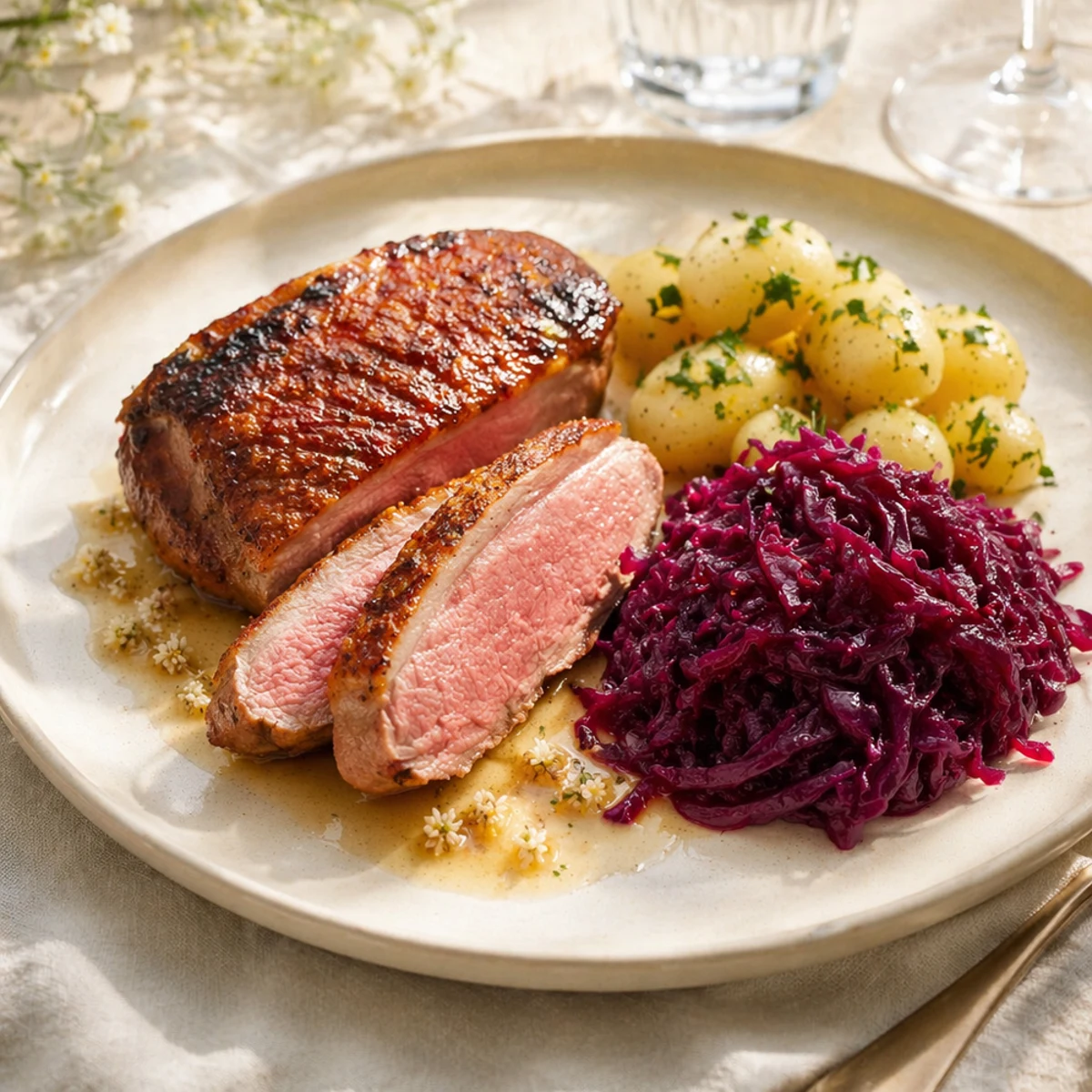
- Slice and serve. Slice the duck breast against the grain. Plate with braised cabbage and parsley potatoes, then spoon the elderflower sauce over the duck.
Nutrition Facts
Per serving:
- Calories: 620
- Protein: 38g
- Fat: 32g
- Carbohydrates: 38g
- Fiber: 5g
- Sugar: 14g
- Sodium: 620mg
Dietary Information
- Contains: dairy
- Gluten-free: yes, if stock and mustard are certified gluten-free
- Not vegetarian
- Not vegan
Perfect Wine Pairings
The best wine pairing for Roasted Duck Breast with Elderflower Sauce, Braised Red Cabbage and Parsley Potatoes needs to do three things well: handle the duck’s richness, echo the sweet-tangy sauce, and stay fresh enough for the cabbage. That is why Pinot Noir is such a natural fit. Its red fruit, silky texture, and bright acidity make it one of the most reliable answers to the question of what wine goes with this dish.
Among the verified pairing data, Domaine de la Romanée-Conti Échézeaux stands out as the top match, with a score of 92/100. It makes sense: Burgundy Pinot Noir often combines perfume, finesse, and structure, which can beautifully mirror the elderflower sauce while lifting the duck. For most readers, this is more of an aspirational benchmark than an everyday purchase, but it shows the style to look for.
A more accessible wine recommendation would be Pinot Noir from Oregon or Sonoma Coast California, especially bottles that emphasize cherry, cranberry, earth, and moderate oak. These styles usually sit in the $15-30 range at Total Wine, Trader Joe’s, BevMo, and local wine shops, making them practical and widely available. They are a strong perfect match because they offer enough acidity for the cabbage and enough softness for the duck.
From the verified matches, Pinot Noir Réserve by Philipp Kuhn and the Spätburgunder Trocken wines from Ahr and Baden also score well. German Pinot Noir, especially from cooler regions, can be a smart choice when you want a lighter, more savory profile with freshness and precision. If you prefer bubbles, Comtesse Alexia Brut Rosé Champagne is another excellent option: the acidity and red-berry character can brighten the plate, especially if you want a celebratory feel.
Look for wines with medium body, fresh acidity, and restrained tannins. Avoid very jammy, heavily oaked reds, which can overwhelm the elderflower notes. For more guidance on matching structure and flavor, Gastrona can help you compare styles and find a wine recommendation that fits both your taste and your budget.
Cooking Tips & Techniques
Duck breast rewards patience. The biggest mistake home cooks make is starting the pan too hot. A cold skillet lets the fat render slowly, which is the key to crisp skin and juicy meat. If the skin browns too quickly, the fat stays trapped and the texture turns greasy instead of crisp.
Scoring the skin is essential, but keep the cuts shallow. You want to help the fat escape, not slice into the meat. After cooking, resting the duck is just as important as searing it. Those few minutes allow the juices to redistribute so the slices stay tender.
For the sauce, balance matters. Elderflower syrup can be fragrant and sweet, so taste as you go. If the sauce leans too sweet, add a touch more vinegar or a pinch of salt. If it feels too sharp, a little stock or butter will smooth it out. The goal is a glossy sauce that tastes bright and elegant, not sugary.
The cabbage should be tender but not mushy. Braising it slowly allows the sweet-sour flavor to develop. If you want deeper color and complexity, cook it a little longer uncovered at the end so excess liquid evaporates. For the potatoes, keep them simple. Their job is to support the duck and sauce, not compete with them.
Serving Suggestions
Serve this dish on warm plates so the duck and sauce stay at the right temperature. Fan the sliced duck breast slightly off-center, spoon the elderflower sauce over the top, and build the plate with a neat mound of red cabbage and a few parsley potatoes beside it. The colors are part of the appeal: deep ruby cabbage, golden duck skin, and bright green parsley make the plate feel restaurant-worthy.
This is a wonderful dinner for a date night, holiday meal, or relaxed weekend gathering. A simple green salad with a sharp vinaigrette can add freshness, while crusty bread is useful for catching any extra sauce. If you are serving wine, open the bottle a little early and let it breathe so the aromas settle into the glass.
Frequently Asked Questions
What wine goes with Roasted Duck Breast with Elderflower Sauce, Braised Red Cabbage and Parsley Potatoes?
Pinot Noir is usually the best answer because it has bright acidity, red fruit, and moderate tannins that work beautifully with duck and braised cabbage. A dry rosé Champagne can also be a smart choice if you want something celebratory and lively. The key is freshness, not heavy oak.
Is Pinot Noir a good wine pairing for duck breast?
Yes, Pinot Noir is one of the classic pairings for duck breast. Its silky texture and cherry-driven fruit complement the meat without overpowering it. For this recipe, Pinot Noir works especially well because it also supports the sweet-tangy elderflower sauce and the acidity in the red cabbage.
What is the best wine for the elderflower sauce in this recipe?
Choose a wine with freshness and finesse rather than bold tannin. Burgundy-style Pinot Noir, Oregon Pinot Noir, or a dry sparkling rosé all work well. They echo the floral and fruity notes in the sauce while keeping the overall pairing balanced and elegant.
Can I find a good wine recommendation for this dish at Total Wine or Trader Joe’s?
Yes. Look for affordable Pinot Noir from Oregon, Sonoma Coast, or Washington State in the $15-30 range. These retailers often carry accessible bottles that fit the style of this dish. Ask for a medium-bodied red with bright acidity and restrained oak for the best result.
What makes this a perfect match for wine pairing?
This dish combines richness, sweetness, acidity, and herbal freshness, which creates a lot of pairing possibilities. The duck needs structure, the elderflower sauce needs lift, and the cabbage needs brightness. That balance is why a well-chosen wine can feel like a perfect match rather than just a good match.
Conclusion
Roasted Duck Breast with Elderflower Sauce, Braised Red Cabbage and Parsley Potatoes is a dish that brings together elegance, comfort, and a beautiful sweet-tangy flavor profile. It is exactly the kind of recipe that makes wine pairing fun, because the right bottle can elevate every element on the plate. Whether you choose a classic Burgundy-style Pinot Noir, an Oregon Pinot Noir, or a sparkling rosé, you have plenty of delicious options.
If you are looking for a wine recommendation that feels personal and confident, Gastrona can help you discover your perfect match. Try the recipe, pour something you love, and enjoy how food and wine come together at the table.